Showing posts with label Erica's Picks. Show all posts

Wednesday, October 31, 2012

Erica’s Five Books: Le Geek, C’est Chic (or Revenge of the Creepy Carnies)

Have you noticed Geeks are getting way too much play these days? Even before Alexandra Robbins’s The Geeks Shall Inherit the Earth, there started to abound some kind of cultural caché of coolness in conjunction with being a Geek. This is absolutely fulsome, people! What about the original Geeks, the ones who bite heads off of live chickens in carnival sideshows? They don’t want to be cool and they don’t appreciate having the word Geek co-opted by runty ne’er-do-wells hoping to parlay their quirky, underdog, outsider status into the new chic. To that end, I’ve compiled a list of books designed to restore meaning to the term Geek, while paying homage to angry, creepy carnies everywhere.

Geek Love by Katherine Dunn (Vintage, $15.95)

Swamplandia! by Karen Russell (Vintage, $14.95)

The Night Circus by Erin Morgenstern (Anchor, $15.00)

Something Wicked This Way Comes by Ray Bradbury (Avon, $7.99)

Miss Peregrine’s Home for Peculiar Children by Ransom Riggs (Quirk, $17.99)

Erica David, October 2012

Thursday, September 27, 2012

Erica’s Five Hardcovers I Would Buy (If I Bought Hardcovers)

Just like there are cat people and dog people, there are paperback people and hardcover people. I could go on and on and enumerate the many ways in which these two species differ from one another but suffice it to say hardcover people smell. That is all ye know on earth, and all ye need to know.

A Hologram for the King by Dave Eggers (McSweeney’s, $25.00)
I’ve never actually read any Eggers, and he’s got enough highly regarded fiction and non-fiction in print that there’s absolutely no excuse for my lackadaisical interest in his oeuvre. I am a fan of his brainchild McSweeney’s however, as a press, a literary magazine, and an internet tendency. Plus, this guy is a master of packaging, as the cover of his latest novel will attest. Frankly, that’s enough to sell me.

Release Date: September 4
NW by Zadie Smith (Penguin, $26.95)
I’m not sure if I’m calling Smith’s latest novel “NW” or “Northwest” in reference to the London neighborhood where her four protagonists live. I do know that ever since White Teeth, I’ve been eager for Smith to get back to London in way that she hasn’t quite since her astonishing debut. Maybe NW is the return trip I’ve been waiting for.

Release Date: September 11
This is How You Lose Her by Junot Diaz (Riverhead, $26.95)
Curious to see what Diaz’s second short story collection, and follow up to the Pulitzer Prize winning Oscar Wao, will look like. You will perhaps recall that the eponymous title character of Wao was haunted by a fuku, or curse. Hopefully Diaz has not succumbed to the fuku of the Pulitzer Prize winner by giving us a follow up that pales in comparison to the award-winning work.

Release Date: September 11
Telegraph Avenue by Michael Chabon (Harper Collins, $27.99)
I couldn’t really get into Chabon’s last novel The Yiddish Policeman’s Union. Maybe it’s because I know nothing about being a policeman, or speaking Yiddish for that matter. Telegraph Ave hits a little closer to home with its tale of Brokeland Records, an indie operation selling soon-to-be-obsolete-product staffed by quirky, often off-putting mouth-breathers who are the hallmark of an independent retail shopping experience. I know a little something about that.

Release Date: TODAY
Casual Vacancy by J.K. Rowling (Little Brown, $35.00)
So as Harry Potter fans aren’t we all, like, obligated to check this out? I should warn you there are no boy wizards in sight. Instead Rowling has given us a murder mystery set in a charming English hamlet full of secrets. I’m getting a definite Peyton Place vibe here, but that’s not going to stop me from referring to this book as Murder in Little Whinging.

Erica David, September 2012

Sunday, April 01, 2012

Erica’s Five for the Fest (Mt. Airy Kids’ Literary Festival, that is)

I’m not sure how the Mt. Airy Kids’ Lit Fest started six years ago. I suspect that some exceptionally bright five year old—reading at a tenth grade level, of course—stomped his feet and held his breath until some beleaguered staff person broke down and said, “Alright already, Kid! Cool your jets! We’ll get all of our favorite children’s authors and illustrators together for a weekend of free readings, signings, and crafts! There will be music classes and puppet shows! There will be door prizes and giveaways! There will be food! Did I mention that all of this will be FREE?” And then, that genius kid, whoever he was, dried his crocodile tears and popped the snot bubble that had crusted over his left nostril and walked off into the sunset. And lo, a festival was born.

Here are five books by five authors you can see in person at our sixth annual Kids’ Lit Festival, April 13th – 15th!

The Popularity Papers, Book Four: The Rocky Road Trip of Lydia Goldblatt and Julie Graham-Chang by Amy Ignatow (Abrams, $15.95)
Mt. Airy’s own Amy Ignatow kicks off our festival with a reading and pizza party on Friday, April 13th at 7:00pm.

Stop Snoring, Bernard! by Zachariah OHora (Henry Holt, $16.99)
This is Zach’s first children’s book and it was chosen as the PA One Book selection for 2012. He’s taking time out of his busy tour schedule criscrossing the state of PA to read us the tale of Bernard, an otter whose LOUD snoring keeps everyone awake at naptime. Saturday, April 14th at 11:00am.

Seriously Just Go to Sleep by Adam Mansbach. Illustrated by Ricardo Cortes (Akashic, $15.95)
You probably know the adult version of this book, New York Times bestseller Go the F*** to Sleep. Not to worry. Ricardo will stop by to read the brand new G-rated version of the story with a slide show of his illustrations on Saturday, April 14th at noon.

Sasquatch’s Big Hairy Drawing Book by Chris McDonnell (Chronicle, $12.95)
Chris has worked as an illustrator and animator on shows like Yo Gabba Gabba! for Nickelodeon and Tim and Eric Awesome Show for Cartoon Network. He’ll be leading a drawing free-for-all on Sunday, April 15th at noon.

Little Dog Lost: The True Story of a Brave Dog Named Baltic by Monica Carnesi (Penguin, $15.99)
Monica is a local artist, illustrator and librarian who was inspired by the story of a curious dog who wandered out onto a frozen river and ended up lost at sea. She’ll tell us all about his daring rescue on Sunday, April 15th at 1:00pm.

Erica David, April 2012

Monday, February 20, 2012

Erica’s Five Books: You Just Can’t Trust a House

What is it with houses? You kill someone in one of them and they’re just like elephants—they never forget. They go on about their business providing shelter and whatnot, but they’re irrevocably imbued with some kind of evil. What’s the deal, houses? Can’t we all just get along? Here are five novels starring real estate you definitely don’t want to own.

The Little Stranger by Sarah Waters (Riverhead, $16.00)
Demented domicile: Hundreds Hall.

“I first saw Hundreds Hall when I was ten years old. I remember its lovely ageing details: the worn red brick, the cockled window glass, the weathered sandstone edgings. They made it look blurred and slightly uncertain—like an ice, I thought, just beginning to melt in the sun.” Downton Abbey, it ain’t.

The Shadow of the Wind by Carlos Ruiz Zafon (Penguin, $16.00)
Demented domicile: The Angel of Mist.

“As I neared the mansion I noticed that one of the statues, the figure of an avenging angel, had been dumped into the fountain that was the centerpiece of the garden…The hand of the fiery angel emerged from the water; an accusing finger, as sharp as a bayonet, pointed to the front door of the house.” Nota bene: when avenging angels point in one direction, it's best to walk in the opposite.

Beloved by Toni Morrison (Vintage, $15.00)
Demented domicile: 124.

“124 was spiteful. Full of a baby’s venom.” Dude, angry ghost babies are the pits. And you know what’s even worse than angry ghost babies? Angry ghost babies of ex-slaves.

The Wind-Up Bird Chronicle by Haruki Murakami (Vintage, $16.00)
Demented domicile: The Hanging House.

“I had never seen a vacant house before, so I didn’t know what an ordinary vacant house looked like, but I guess I figured it would have a sad, beaten sort of look, like an abandoned dog, or a cicada’s cast-off shell. The Miyawakis’ house, though, was nothing like that. It didn’t look 'beaten' at all. The minute the Miyawakis left it got this knowing look on its face…You just can’t trust a house.” Tell me about it, they’re always telling your secrets and airing your dirty laundry in their backyards.

The Shining by Stephen King (Simon & Schuster, $8.99)
Demented domicile: The Overlook Hotel.

“The Overlook was built in the years 1907 to 1909. The closest town is Sidewinder, forty miles east of here over roads that are closed from sometime in late October or November until sometime in April. A man named Robert Townley Watson built it, the grandfather of our present maintenance man. Vanderbilts have stayed here, and Rockefellers, and Astors, and Du Ponts. Four Presidents have stayed in the Presidential Suite.” Guess what? I’m still not booking my next vacation there.

February 2012, Erica David

Wednesday, November 30, 2011

Five Books That Prove Erica is a Cheater

I am a big, fat cheater. Maybe you’d already figured that out. I’ve already confessed to snooping through people’s personal effects and reading the last lines of a book first, so this really shouldn’t surprise you. This month I’ve figured out a way to cheat this staff pick list. I’ve had someone else do the work for me, some poor unsuspecting volunteers at Housing Works Bookstore Café in New York. I snowed ‘em with the old, “I’m looking for a book. I don’t remember what it’s called or who wrote it but I think the cover was yellow and it might be about dogs’ butts?” Works every time. Give it up for evil genius, folks. Henceforth you may call me Madame Dastardly.

Typical of New Yorkers, the Housing Works staff pick list is all Nabokov, vampires, Booker Prize winners and coffee.

A History of the World in 10½ Chapters by Julian Barnes (Vintage, $15.95)
Lot of chit-chat lately about Barnes, who just won the Man Booker with The Sense of An Ending. HoW10.5 finds him being a bit of an experimental smarty-pants. Yeah, the road to the Booker is choc-full of literary landmines.

The Good Man Jesus and the Scoundrel Christ by Philip Pullman (Canongate, $14.00)
A tale of two Jesuses. It’s the classic good twin/bad twin plot meets the classic Messiah plot. If you’ve read Pullman’s His Dark Materials trilogy then you know he’s not afraid to manhandle the man upstairs.

Queen of the Damned (Vampire Chronicles Book 3) by Anne Rice (Ballantine, $7.99)
Before there was Stephenie Meyer, there was Anne Rice, and her vampires knew how to do stuff like have sex before marriage because nobody who’s going to live for eternity wants to wait for eternity to get laid. I’m just sayin’.

Uncommon Grounds: The History of Coffee and How It Transformed Our World by Mark Pendergrast (Basic Books, $19.95)
Pendergrast is also known for his unauthorized history of Coca-Cola titled For God, Country, and Coca-Cola. Note to Pendergrast: stop making me feel bad about the things I like to drink.

Pale Fire by Vladimir Nabokov (Vintage, $15.00)
Yep, the obligatory Nabokov entry, because New York can’t get caught with its pants down when it comes to literary prowess.

November 2011, Erica David

Thursday, October 20, 2011

Five Books Erica Eagerly Anticipates This Month

Ooooooh, kids! This month some of my favorite authors are droppin’ mad science! I will clarify. Usually, when I say “mad science” I am being very literal. I am talking Victor Frankenstein and Christopher Lloyd’s bats@*t crazy Doc Brown from Back to the Future. But in this instance I am being idiomatic, using the Urban Dictionary definition of “droppin’ science” which is “to rhyme, or say or do something original or unique, especially when rapping or in music.” So this October happens to be when several of my go-to authors release new work. They will continue, as is their wont, to do something original or unique, and consequently blind me with SCIENCE!

The Cat’s Table by Michael Ondaatje (Knopf, $26.00)
Release Date: October 4
There’s a lyricism about Ondaatje’s writing and a beauty to his prose that makes me want to take any journey with him—especially this latest one chronicling a young boy’s voyage on a ship bound for England and the rag-tag band of boys seated with him at the titular table.

The Marriage Plot by Jeffrey Eugenides (Farrar, Straus and Giroux, $28.00)
Release Date: October 11
Last I saw Eugenides it was a few years after The Virgin Suicides and just before Middlesex and the Pulitzer Prize. I thought: this dude has style, from the rolled cuffs of the dark-wash jeans he was wearing, to the unexpected first-person plural narrative voice of The Virgin Suicides. I’m curious to see what his first novel in almost 10 years looks like, concerned as it is with the marriage plot—that weathered old chestnut at the heart of many a great English novel which chronicles courtship rituals (traditionally) between men and women on the way to the altar.

Zone One by Colson Whitehead (Doubleday, $25.95)
Release Date: October 18
I’ve been a fan of Whitehead’s since The Intuitionist, his genre-bending exploration of racial congress and upward social mobility set within his brilliantly imagined, cutthroat world of elevator inspectors. Now that he has set his sights on deconstructing the post-apocalyptic zombie novel, I am all a-flutter.

In Other Worlds: Science Fiction and the Human Imagination by Margaret Atwood (Nan A. Talese, $24.95)
Release Date: October 18
Sometimes Canada gets it right: maple syrup, hockey and the venerable Mags Atwood. What can you say about the woman who’s given us some of the greatest science fiction on the planet? This collection brings together heretofore unpublished lectures, essays and reviews in which Atwood discusses her relationship to the genre.

IQ84 by Haruki Murakami (Knopf, $30.50)
Release Date: October 25
At 944 pages, Murakami’s latest is being touted as a magnum opus. It’s his take on Orwell’s 1984, set in Tokyo in the same year and it follows the adventures of a young woman who discovers a parallel universe. Personally, I’d like to see this tome duke it out in a three-way death match with two other massive, recently-released tree-killers, Reamde by Neal Stephenson and A Dance with Dragons by George R.R. Martin. It has some serious weight, literary and otherwise, to throw around.

October 2011, Erica David

Tuesday, September 27, 2011

Erica’s Five Books: Best of the Tattooed Ladies

Don’t let the trashy covers put you off. It’s a design thing that all the publishing kids are doing these days: slapping a scantily clad white chick with tattoos and/or ridiculous weapons on the front cover of urban fantasy novels. It usually sends my eyes rolling far into the back of my head because it’s, like, way off-putting. I mean, I know that urban fantasy is a genre like any other, and like any other it has its clichés, and that the clichés can get hecka annoying, like when the first person female narrator prior to meeting her smokin’-hot-sexy-pants vampire/were/fae/angel/demon mate says stuff like “I’m 5’ 10”, 125 lbs with honey-blond hair, but with some eye-liner on I can pass for exotic,” but these fulsome covers make it impossible to separate the wheat from the chaff. But, take heart, dear reader, I have done the dirty work for you. I have slogged through these mass market UF series with their tawdry covers and selected the roses among thorns. Yeah, somebody had to do it.

Moon-Called by Patricia Briggs (Ace, $7.99)
Tattooed Lady: Mercedes “Mercy” Thompson. Don’t let the nickname fool you. Mechanic-by-day, bad-A-by-night, Mercy Thompson is more likely to pop you with a crow bar than show you mercy if her mysteriously keen sense of smell tells her that you’re up to no good.

Magic Bites by Illona Andrews (Ace, $7.99)
Tattooed Lady: Kate Daniels. Husband and wife team “Illona Andrews” gives us a brilliant UF yarn set in a world where magic and technology compete. When magic flares up, cars crap out, guns don’t fire and sometimes all hell breaks loose. Kate Daniels is the brash, sword-wielding Han Solo of this world gone topsy-turvy.

Dark Fever by Karen Marie Moning (Dell, $7.99)
Tattooed Lady: MacKayla “Mac” Lane. Steeped in Irish folklore and set predominantly in modern-day Dublin, Dark Fever follows Mac as she struggles to solve her sister’s murder, acquire a reading knowledge of Gaelic, and keep from running afoul of the immortal fae, V’lane, who’s been known to hold human women in sexual thrall.

Grave Witch by Kaylana Price (Roc, $7.99)
Tattooed Lady: Alex Craft. Alex is a witch who’s grave sight allows her to talk to the dead, and Death in particular, who happens to be a blue-jean-wearing hottie. Brings new meaning to the phrase “a date with Death.”

Halfway to the Grave by Jeaniene Frost (Avon, $7.00)
Tattooed Lady: Cat Crawfield. People keep bringing up the B-word when they talk about this series and when I say B-word I mean Buffy, as in Buffy the Vampire Slayer. It probably has something to do with the fact that the heroine kicks some serious buttowski—and it can’t hurt that, Bones, the lead vampire, has a certain tortured British malaise that puts one in mind of Buffy’s vampire (sort of) love Spike.

September 2011, Erica David

Thursday, August 18, 2011

Erica’s Five Novels Starring Philadelphia

What with all the jibber jabber about Paris in the pages of recent indie bestsellers, I got to thinking about Philly and how it rarely gets top billing as the star of those kind of Eat, Pray, Love type books—as the romantic city so steeped in literary history and gastronomic inspiration that it can shake a life to its foundations and EFFECT GREAT CHANGE. It more often has a supporting role as the backdrop of a gritty crime drama. But here are five books where Philly and its neighborhoods get the star treatment, where like the New York City of Sex and the City, it gets to play the all important “fifth lady” in a stellar ensemble cast.

Tumbling by Diane McKinney-Whetstone (Harper Perennial, $13.99)
“The black predawn air was filled with movement. Its thin coolness rushed through the streets of South Philly, encircling the tight, sturdy row houses.”

Love Walked In by Marisa de los Santos (Plume, $14.00)
“…Mr. Fringer inclined his head to shoot a look over the tops of his glasses at us. His shop was not one of the truly elegant ones on Pine Street, no mint-condition eighteenth-century writing table posing tiptoe like a ballerina in his window. No mint-condition anything. But a good shop—my favorite.”

The Corrections by Jonathan Franzen (Picador, $16.00)
“Here in the heart of Chestnut Hill, needless to say, the sheet-metal currency of Neverest and Western Civil Defense and ProPhilaTex signs in every front yard was backed by the full faith and credit of floodlights and retinal scanners…but elsewhere in northwest Philly, down through Mount Airy into Germantown and Nicetown where the sociopaths had their dealings and dwellings, there existed a class of bleeding-heart homeowners who hated what it might say about their “values” to buy their own security systems…”

In Her Shoes by Jennifer Weiner (Washington Square Press, $15.00)
“The sum total of her big-screen experience might be the three seconds that a sliver of her left hip was visible in Will Smith’s second-to-last video. And she might be just barely bumping along, while some people, namely her sister, Rose, went whizzing through Ivy League colleges and straight into law schools, then into law firms and luxury apartments in Rittenhouse Square like they’d been shot down the water slide of life…”

If Sons, Then Heirs by Lorene Cary (Atria Books, $24.00)
“Jewell Thompson nosed her sedan into the narrow Philadelphia street… Outside her noisy mind, rows of identical two-story brick houses squatted beside Cobbs Creek Park, muffled by heavy fog and a cold, early-spring, early-Sunday-morning quiet.”

August 2011, Erica David

Friday, July 29, 2011

Erica’s Five Maptastic Reads to Help You Find Your Orientation

I’ll be honest, maps make me anxious. In order to read them they require two very important things: 1) that you know where you are and, 2) that you know where you’re going. This is a surefire way to send me into an existential crisis. I am that girl who hears the Mahogany theme song every time she steps out the door: Do you know where you’re going to?/ Do you like the things that life is showing you?/ Where are you going to?/ Do you know? So, here are several map collections, real and imagined, guaranteed to point me, I mean you, in the right direction.

You are Here: Personal Geographies and Other Maps of the Imagination by Katherine Harmon (Chronicle, $24.95)
“Fake” maps galore in gorgeous color plates including a Map of Lovemaking and New Map of the Land of Matrimony -- charting stormy seas no doubt.

Atlas of Remote Islands: Fifty Islands I Have Never Set Foot On and Never Will by Judith Schalansky (Penguin, $28.00)
I’m not planning to set foot on these islands either, but I like that Schalansky’s research and beautiful illustrations provide me with highly esoteric (and highly entertaining) knowledge of seldom visited locales in the event that I find myself in a Robinson Crusoe type situation.

Infinite City: A San Francisco Atlas by Rebecca Solnit (University of California Press, $24.95)
Solnit is a master of blending the personal and the historical. Her atlas explores San Francisco thematically, politically and above all personally, while elucidating our modern notions of place.

Transit Maps of the World by Mark Ovenden (Penguin, $25.00)
Yes, a map of Philadelphia’s transit system is featured and it feels quaint and old-timey with its reference to the regional rail lines by their old call numbers (e.g., R7, R8). The Philly map suffers however, from being featured opposite a photo of the Prague subway system which, with its squat train carriages and futuristic tunnels, looks as if you’re shooting toward your destination in a DeLorean.

[Editor's Note: Transit Maps of the World is also one of Jen's June 2010 Picks.]

The Selected Works of T.S. Spivet by Reif Larsen (Penguin, $16.00)
12 year-old cartographer T.S. is probably the only character I’ve ever met who can map a dinner conversation. His brilliant, inventive illustrations haunt the margins of this quirky, charming novel.

July 2011, Erica David

Saturday, July 09, 2011

Erica’s Top 5 Illustrated Wonders


I have had it with words this month. Seriously, it’s too hot for them. I had a My Fair Lady moment the other day: “Never do I ever want to hear another word/ There isn’t one I haven’t heard.” As a result there are several authors I’d like to shake vigorously (I’m talkin’ to you Henry James, you elaborate comma-splicer)! So I give you five books where pictures are the gracious, graphic and anything but garrulous stars.

Radioactive: Marie & Pierre Curie: A Tale of Love and Fallout by Lauren Redniss (Harper Collins, $29.99)

Breathtaking and genre-bending, this illustrated biography—for lack of a better term—blends history, science and art, weaving the Curies’ personal anecdotes with scientific fact into one seamless, startlingly romantic tale.

Ramayana: Divine Loophole by Sanjay Patel (Chronicle Books, $29.95)

Patel brings us a beautifully drawn and easy-to-digest version of the Ramayana, the epic legend of a blue-skinned prince which lies at the heart of Hindu mythology. His fanciful drawings remind me of Genndy Tarktakovsky’s mythic animated series Samurai Jack, with their heavy lines, sharp angles and flat two-dimensionality that makes them read almost like paper-cut artwork on the page.

Alice’s Adventures in Wonderland by Lewis Carroll, Illustrations by Camille Rose Garcia (Harper Collins, $16.99)
Garcia’s illustrated Alice is a spidery-lashed maiden with kohl-rimmed eyes who seems to exist at the visual crossroads where goth and rockabilly meet. Is she a troubled innocent at the mercy of the Queen of Hearts or a Grade A mischief maker whose pointy teeth indicate a vampiric nature? Garcia’s beautiful plates make you wonder.

Robot Dreams by Sara Varon (First Second, $16.99)
My latest book crush. There’s something undeniably tender about this graphic novel, completely devoid of speech bubbles and dialogue, that just gets me all choked up. Maybe it’s because it’s about an ill-fated friendship between two of my favorite kinds of “almost-people:” dogs and robots. Sometimes “almost-people” are even more human than real people, especially when they dream.

The Steampunk Bible by Jeff Vandermeer with S.J. Chambers (Abrams, $24.95)
Everything you always wanted to know about steampunk but were afraid to ask has been collected in this splendiloquent visual compendium which charts the influence of this fantastical genre in fashion, literature and art. A perfect read for those long, cross-country dirigible trips.

June 2011, Erica David

Thursday, May 26, 2011

Erica's 5 Books with "Paris" in the Title


I am not a trendsetter but I can usually discern one—especially when it slaps me in the face with all the theatricality of a maudlin 1950’s melodrama. So it is with the latest trend to hit the Indie Bestseller Lists: books with “Paris” in the title. They say you shouldn’t judge a book by its cover and the same goes for titles, too, I’m sure, but that’s what I’m about to do. I haven’t read a single book on this list, but like Chuck Norris, I’ve stared them down until I’ve gleaned the information that I wanted.


The Sweet Life in Paris by David Lebovitz (Broadway Books, $14.00)
Dear Book Cover, you had me at croissant. If there is a croissant on something I will buy it. And if ever there is a croissant on another croissant I will buy them both.


Lunch in Paris: A Love Story with Recipes by Elizabeth Bard (Back Bay Books, $13.99)
Huh. Stumped on this one. I have no idea what this book could be about. Thankfully Back Bay Books has seen fit to put the following gem of a line on the front cover: “Romance on the front burner… it’s Eat, Stay, Love with a side of spiced apricots.” Well, just as long as no one is falling in love with a Frenchman and peppering her narrative with cutesy recipes.


The Paris Wife by Paula McClain (Random House, $25.00)
Rumor has it that the titular wife in question is the first wife of famed drunkard, er, writer, Ernest Hemingway. I don’t care who she is. The only thing I know is that the Philadelphia Wife could beat the Paris Wife’s @$$ any day.


Hungry Woman in Paris by Josefina Lopez (Hachette, $12.99)
Totally about aliens, brain-sucking, body-leeching aliens. Nothing at all to do with women eating and finding love and/or spiritual awakening in Paris, which is a shame if you ask me. There just aren’t enough of those books.


Paris, Paris by David Downie (Broadway, $15.00)

I’m hoping that this is just like SPECTACULAR, SPECTACULAR, the show within the show that was Baz Luhrmann’s 2001 musical extravaganza Moulin Rouge. In other words, it should be heavy on the Ewan McGregor and light on the Nicole Kidman, who should die of consumption at the end. I base my hopes solely on the fact that this is classified as a travelogue (and that the author wears an eye patch).


-May 2011, Erica David

Wednesday, April 06, 2011

Erica’s 5 Fairy Tale Retellings (In Honor of the Royal Wedding)


Erica’s 5 Fairy Tale Retellings (In Honor of the Royal Wedding)

Nothing says fairy tale like a prince getting married. On April 29, H.R.H. Prince William will wed Kate Middleton, or as I like to call her: Milady Trench Coat. Wills, why didn’t you wait for me? I waited for you. When you were four and I was ten I decided not to make my move until all of your adult teeth came in, and this is how you repay me—me, the Parker-Bowles to your Prince Chuck? I’m not saying you have to jilt your bride or abdicate or anything, just hit me up on Facebook when you’re free.

My Mother She Killed Me, My Father He Ate Me, ed. Kathryn Berheimer (Penguin, $17.00).
‘Cause isn’t that what always happens in fairy tales, killing and eating? Contemporary authors like Neil Gaiman and Joyce Carol Oates drop breadcrumbs and invite you to follow the trails of their deliciously witchy short stories.

The Bloody Chamber and Other Stories by Angela Carter (Penguin, $13.00).
Remember that time I married that dude and moved into his house and he was all: “Erica, you can go anywhere except that one room,” and I was like: “uh, alright,” but then he went away on a business trip and I totally went into that room and then disappeared for a bit only to be replaced by what you suspect is some sort of clamoring haint in a gelatinous facsimile of my former body?

Ash by Malinda Lo (Little Brown & Co, $8.99)
A Cinderella retelling that I wanted to like more. There are sinister fairies and a cool stag-slaying Huntress and usually that’s enough to sell me. But there was something missing. Maybe it was those damned Disney door mice. Remember the chubby one that called her Cinderelly? Ah, good times.

Kissing the Witch by Emma Donoghue (Harperteen, $11.99)

Donoghue’s latest offering Room is itself a dark fairy tale cast in the trappings of present-day abduction and captivity narratives. Kissing the Witch meditates on more traditional fairy-tale characters, however. Its 13 interwoven stories dovetail seamlessly from one to the next as old heroines awake in new skins.

The Rose and the Beast by Francesca Lia Block (Harperteen, $8.99)
Props to Maleka for introducing me to Block. Her Weetzie Bat series is a quirky, modern-day fairy tale set in a Los Angeles full of “slinksters,” ducks and dreams. The Rose and the Beast reinvents the lives of nine famous fairy-tale heroines in modern landscapes that manage to retain their magic through the transformative beauty of Block’s prose.


April 2011, Erica David

Sunday, March 20, 2011

Erica’s 5 Great Novels Under 200 Pages


Erica’s 5 Great Novels Under 200 Pages

Because really, who has time to read anymore? Hey, Dickens, I have a life. Places to go. People to see. Could you maybe cut it down to a tale of just one city instead of two?

Tinkers by Paul Harding (Bellevue, $14.95)
Has the distinction of being the shortest book that it took me the longest to read. I wallowed in its language: lovely, languorous, poetic, effulgent. The final thoughts of a dying man unspool as visceral memory and sensation, intertwined with the life of his epileptic father. 191 pp.

The Passion by Jeanette Winterson (Grove, $14.00)

Maybe it’s best if I don’t tell you what this novel is about. If I try to I’ll say things like web-footed gondolier’s daughter meets Napoleon’s cook and walks on water. In lesser hands this strange book, which exists at the intersection of fairy tale and myth, could easily devolve into a circus. Winterson gives us an elegant carnival. 176 pp.

The Stranger by Albert Camus (Vintage, $12.00)

Lots of isms afloat in this book: existentialism, absurdism, nihilism, stoicism. But it’s not the big ideas that keep drawing me back to this deceptively simple story. It’s Meursault, the titular stranger, who struggles with existence outside of the social mechanism and, at times, outside of reason and remorse. 123 pp.

Lucy by Jamaica Kincaid (Farrar Straus & Giroux, $13.00)

As a 19 year-old West Indian girl working as an au pair for a white family in the city, Lucy negotiates issues of class, culture and coming-of-age in an unflinching voice that is spare, sharp and lyrical. 163 pp.

Push by Sapphire (Vintage, $13.00)

This is a tough read. I won’t sugar coat it. Precious Jones lives a dark life scarred with abuse and illiteracy. Though she learns to read and write, it doesn’t dull the edges of the brutality that is part of her reality. But literacy does give shape to her experience, allowing her to build and protect her own personhood. 191 pp.


March 2011, Erica David

Tuesday, March 08, 2011

Erica's 5 Books: As Seen on TV


Erica’s 5 Books: As Seen on TV

I know, I know, it’s Mt. Airy. Most of you don’t even have a TV. You’re busy eschewing television in favor of nobler intellectual pursuits. Well, I’ve got a secret for you: sometimes TV steals your books and turns them into TV shows! All hail the Hell Box and its magnificent cunning!

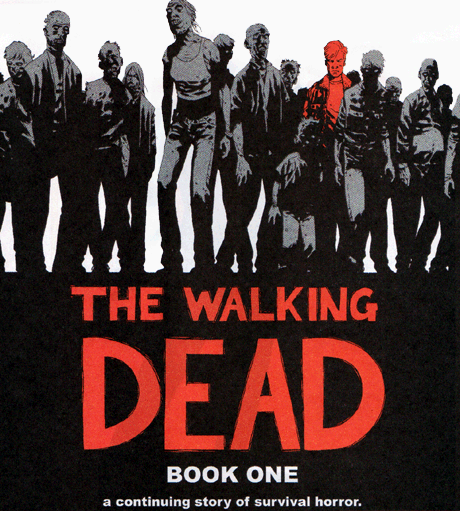
The Walking Dead Vol. 1 by Robert Kirkman (Image, $34.99).
Who exactly are the walking dead? Are they flesh-hungry zombies roving the countryside or are they the flawed band of humans who have survived the zombie apocalypse only to eke out a brutal, fragile existence that one could hardly call living?

206 Bones by Kathy Reichs (Pocket, $7.99).
Temperance “Tempe” Brennan is a ballsy, no-nonsense forensic anthropologist who finds herself injured and trapped in an underground tomb, making for high drama in low places. Fox’s Bones TV series keeps Temperance as its lead, but uses Reichs’s real life experiences as its basis. So there’s no cheating on this one, folks. If you want to know how she escapes the tomb, you’ll have to read the book.

Darkly Dreaming Dexter by Jeff Lindsay (Vintage, $7.99).
Dexter Morgan is Jeff Lindsay’s serial killer with a heart of gold—he only murders other serial killers. Points awarded for titular alliteration and for the complexity of Lindsay’s murderous antihero in thrall of a Dark Passenger, i.e., his need to kill. Dexter wears humanity as the ultimate disguise and is played to apathetic, amoral perfection by Michael C. Hall in the Showtime series.

Dead Until Dark by Charlaine Harris (Penguin, $7.99). The Sookie Stackhouse paranormal romance mysteries are a soft, froofy PG-13, but the HBO series True Blood is definitely a hard, salacious R. I’ve seen more of Anna Paquin’s naked flesh than I ever cared to see, but Paquin for all her nudity, manages to maintain Sookie’s gutsy Southern charm and almost pigheaded sleuthing instincts—a hallmark of the book series.

The No.1 Ladies’ Detective Agency by Alexander McCall Smith (Random House, $14.00). The first in this gentle, charming series following Mma Ramotswe, Botswana’s only lady detective, #1LDA combines a light touch with a penetrating exploration of character, politics and social mores. Subtext steeps along with every quaint cup of red bush tea enjoyed by the resourceful, size 22 heroine, cunningly portrayed by Philly’s own Jill Scott in the HBO miniseries.

February 2011, Erica David

Tuesday, December 21, 2010

Erica’s Five Seasonal Book & Beverage Pairings

It’s cold, folks, and I am like a bear. I want to sleep and eat—not necessarily in that order—and there’s nothing quite like a good bedtime story to kick off my annual winter hibernation. I also like a nice glass of warm milk (preferably 80 or 100 proof) before I hunker down in my cave. But be warned, kiddies, this list, like many a trendy Philadelphia restaurant, is strictly BYOB.

Holidays on Ice by David Sedaris (Little, Brown & Co., $16.99)
There is something very elf-like about Sedaris. Maybe it’s his wacky, little Seven Dwarves reading voice, or the elfin mischief suffusing his prose. So it seems only natural that he did time working as an elf named Crumpet at the SantaLand in Macy’s Herald Square, and that he spins one heck of a yarn about it.
Recommended pairing: Evan Williams Egg Nog, available at any fine state store—oh, I’m sorry, I meant Wine and Spirits Shoppe.

Apples I Have Eaten by Jonathan Gerken (Chronicle, $14.95)
Beautifully photographed apples appear whole, then halved, in each spread. Totally porn for apples—if apples were into that kind of thing.
Recommended pairing: Hot apple cider. High Point Café makes a mean one.

The Latke Who Couldn’t Stop Screaming by Lemony Snicket (McSweeney’s, $11.00)
It’s a latke, damn it, not a Christmas donut! Why do people insist on making it something that it’s not? Snicket reminds us that unfortunate events sometimes befall foodstuffs, too—not just the hapless Baudelaire orphans.
Recommended pairing: Egg nog latke—erm, latte. Your local Wawa makes decent egg nog, believe it or not. Pour some of this into your morning coffee then make that shushing sound like you have an espresso machine.

Awkward Family Photos by Mike Bender and Doug Chernack (Three Rivers Press, $15.00)
It’s not really polite to make fun of your own family during the holidays, so thankfully Awkward Family Photos lets you make fun of other peoples’. A gnarlier collection of feathered hair and tacky sweaters ne’er was seen.
Recommended pairing: Mulled wine. I don’t have a good recipe for this so I suggest asking a British person. She can also tell you what wassail means.

The Elements of Style, Illustrated, by William Strunk Jr., E.B. White, and Maria Kalman (Penguin, $16.00)
Kalman’s quirky watercolor illustrations transform this style manual into a charmingly surreal meditation on life. To quote White: “Your whole duty as a writer is to please and satisfy yourself, and the true writer always plays to an audience of one. Start sniffing the air, or glancing at the Trend Machine, and you are as good as dead, although you may make a nice living.” Advice not just for the writer, but for the human being.
Recommended pairing: Champagne, of course, liquid joy—the only way to weather a cold winter’s nap and spring into a new year.

December 2010, Erica David

Wednesday, November 24, 2010

5 Books That Stole Erica’s Innocence (And She Wants It Back)

This year marks the 16th anniversary of the release of the movie Pulp Fiction. I give Pulp Fiction the dubious honor of being THE MOVIE THAT STOLE MY CHILDHOOD. Before seeing it, I had only vague, shadowy imaginings of the concepts of drug overdose and male rape. Pulp Fiction exposed me to both amidst trenchant mirth and gleeful mayhem in harsh, glaring Technicolor. Here are five books that did something similar. Yeah, I’m a big girl now, but I don’t have to like it.

Flowers in the Attic/Petals on the Wind by V.C. Andrews (Simon Pulse, $10.99)
If V.C. Andrews were alive today I would totally shake her hand. Thanks for exposing me to incest. Thanks for making it eerily titillating in ways an 11 year-old can barely understand. Thanks for somehow making me believe that a brother and sister are meant to be together. Thanks for making me feel pervy all over again.

The Road by Cormac McCarthy (Vintage, $14.95)
People think Cormac McCarthy is brilliant. I think he sits at home thinking up new and horrific ways humans can kill and cannibalize each other. Father and son walk the road in a post-apocalyptic world gone all “Mad-Maxy” with roving bands of evil-doers, while trying to preserve their own humanity. Not only is this no country for old men, it’s apparently no country for my innocence—Cormac, you dark bastard.

John Dollar by Marianne Wiggins (WSP, $14.00)
What is it about little girls that makes them so damned evil? Strand them on a deserted island and the result is a hundred times more terrifying, gut-wrenching and erotically charged than Lord of the Flies. Oh, Robinson Crusoe, you think you had it tough. Just be glad you’re not a sailor by the name of John Dollar.

Beloved by Toni Morrison (Vintage, $15.00)
Holy heck, Toni Morrison! Did you have to do it? Did you have to use fiction as a means of bearing witness to atrocity and human suffering? Are you and Elie Wiesel engaged in some demented game of one-upmanship in which you try to outdo each other in portraying the horrors visited upon a people? How is it that a work for fiction can be so undeniably, irrevocably true?

Money by Martin Amis (Penguin, $15.00)
Wait, you mean you can write yourself into your own novel as, like, a character and then run into your own protagonist whom you have consequently named John Self? Which wall is this breaking, 4th, 5th, 6th? Be gentle with me, buddy. It’s my first time at metafiction and I hear the first time always hurts.

November 2010, Erica David

Friday, October 29, 2010

Erica’s Five Adventures in Steampunk

Already you’re looking at me funny and I didn’t even do anything. I just said "steampunk" and you were all: huh? And I was all: you know, it’s kind of like a futuristic vision of the world based on a distinctly Victorian version of the future peopled with fantastical steam-powered machines, dirigibles called airships, people who fly them called aeronauts, bustles, monocles, goggles and other coggy, clockwork goodness inspired by the writings of H.G. Wells, Jules Verne and authors of that ilk. You’re all: dude, you’re blowing my mind. Let’s go get an Orange Julius.

Boneshaker by Cherie Priest (Tor, $15.99)
While some version of Victorian England is often the setting for a steampunk adventure, it’s not a prerequisite. Boneshaker takes place in 19th century Seattle, in the midst of an alternative history where the Civil War still rages. The titular Boneshaker is an incredible drill engine which has destroyed Seattle proper, having released a poisonous gas that turns people into zombies. Zeke Wilkes enters the gas lands to clear his father’s name and it’s up to his resourceful mother Briar to track him down. Briar is definitely the clockwork heart of this fabulous, fantastical yarn which ticks toward conclusion at a rollicking pace.

Girl Genius Vol. 1: Agatha Heterodyne and the Beetleburg Clank by Phil and Kaja Foglio (Studio Foglio, $22.95)
The tagline says it all: a gaslamp fantasy with adventure, romance and mad science! I’m just gaga for mad science and Girl Genius doesn’t disappoint. It follows plucky heroine Agatha Clay, er, Heterodyne, a student at Transylvania Polynostic University, who, despite her dedication to the world of ingenious invention, can never actually get her inventions to work. All of that changes however, through a series of extraordinary events which reveal that Agatha may be a Spark, i.e., one with a special hereditary genius for mad science. This beautiful color edition graphic novel collects the first three issues of this ongoing comic turned web comic, which were originally published in black and white.

Soulless by Gail Carriger (Orbit, $7.99)
The first in what’s now the Parasol Protectorate series, Soulless features heroine Alexia Tarabotti who finds herself quite without a soul. Hellfire and damnation! I hate it when that happens. But don’t worry about Alexia, she’s got the perfect blend of grit and determination couched in impeccable manners to lead you through this frothy romp through a 19th century London peopled with vampires, preternaturals and other things that go bump in the gaslamp-lit night. Did I mention the ferociously dashing Lord Conall Maccon, Scottish werewolf? Insert sexy growl here.

The League of Extraordinary Gentlemen Vol. 1 by Alan Moore (Wildstorm, $14.99)
I want to be Alan Moore when I grow up. He’s given us Watchmen, V for Vendetta, From Hell and a ton of other brilliant graphic novels and comics which haven’t been made into sh*tty movies. The League of Extraordinary Gentlemen was also made into a movie and its sh*tt*ness is debatable, but fortunately I’m talking about the graphic novel which isn’t sh*tty in the least. Six of England’s most brilliant champions, Alan Quartermain, Captain Nemo, Hawley Griffin, Dr. Henry Jekyll, Mr. Edward Hyde and Mina Murray (the former Mrs. Harker) are assembled by the mysterious Campion Bond to defeat a nefarious baddie bent on world domination. I love it when literary heroes team up like the Super Friends to kick some nefarious-criminal-mastermind-ass.

Android Karenina by Leo Tolstoy and Ben H. Winters (Quirk, $12.95)
The publishing kids these days are calling it a “mash-up” when you take a classic and add in some genre-bending element like fangers, werethings and zombie-doodles. I thought I was bored already, but then Android Karenina came along. I’ll be honest; I thought the original Anna Karenina was a total snooze-fest, so I’m all in favor of trying to spice it up by adding a few robots and airships. Plus there are pictures! Uh, maybe you would call them illustrations or plates. In fact there’s like a table of them. Faaaaaanncy! But seriously, though, this latest mash-up is jolly good steampunk fun, even while it explores class struggle and cultural politics through the lens of a robot servant class. It’s an improvement on the original for sure. Yeah, I said it. Strike me down, Tolstoy.

October 2010, Erica David

Monday, August 23, 2010

Erica’s Five Last Lines That Seal the Deal

Oh, you know you’ve done it. You open a book and flip right to the end. You read the last line first, you impatient, spoiler-loving son of a gun! I do it because I like an author who knows how to close. If you can nail the end, then at least I know you’re good for a beginning and a middle.

Brave New World by Aldous Huxley
(Harper Perennial, $14.99)
“Slowly, very slowly, like two unhurried compass needles, the feet turned towards the right; north, north-east, east, south-east, south, south-south-west; then paused, and, after a few seconds, turned as unhurriedly back towards the left. South-south west, south, south-east, east…”

A Clockwork Orange by Anthony Burgess
(W. W. Norton, $13.95)
“And so farewell from your little droog. And to all others in this story profound shooms of lipmusic brrrrrr. And they can kiss my sharries. But you, O my brothers, remember sometimes thy little Alex that was. Amen. And all that cal.”

The Brief Wondrous Life of Oscar Wao by Junot Diaz
(Riverhead Books, $15.00)
“He wrote that he couldn’t believe he had to wait for this so goddamn long. (Yabón was the one who suggested calling the wait something else. Yeah, like what? Maybe, she said, you could call it life.) He wrote: So this is what everybody’s always talking about. Diablo! If only I’d known. The beauty! The beauty!”

The Catcher in the Rye by J.D. Salinger
(Little Brown & Company, $6.99)
“If you want to know the truth, I don’t know what I think about it. I’m sorry I told so many people about it. About all I know is, I sort of miss everybody I told about. Even old Stradlater and Ackley for instance. I think I even miss that goddam Maurice. It’s funny. Don’t ever tell anybody anything. If you do, you start missing everybody.”

Their Eyes Were Watching God by Zora Neale Hurston
(Harper Perennial, $14.99)
“Here was peace. She pulled in her horizon like a great fish-net. Pulled it from around the waist of the world and draped it over her shoulder. So much of life in its meshes. She called in her soul to come and see.”

August 2010, Erica David

Friday, July 30, 2010

Erica’s Five Extraordinary Correspondences

I confess: I’m a snoop. I will go through the text messages on your cell phone. I will read your email and sift through your private papers. If you have a deep, dark secret, do not keep it in a shoebox in your closet. I will find it. Luckily, there is a literary genre that allows me to indulge my need to snoop: the epistolary novel. I can read other people’s fake letters and nobody gets hurt.

Griffin & Sabine: An Extraordinary Correspondence by Nick Bantock (Chronicle Books, $19.95)
The letter fetishist in me lives her guilty pleasure each and every time she slips between the covers of this beautifully written and illustrated book. The correspondence of the title characters is fastened to the pages allowing you to slip handwritten letters from their envelopes and hold them between your sweaty palms. Feel like both a god and a pervert as you examine the intimate letters of Griffin Moss, an isolated artist living in London, and Sabine Strohem, an unknown woman who, though thousands of miles away, can somehow see and experience his art as he creates it. Is she real or a figment of Griffin’s troubled imagination? “Foolish man,” Sabine writes, “You cannot turn me into a phantom because you are frightened.” Nothing like a quarrelsome muse to make you question your own sanity.

84, Charing Cross Road by Helene Hanff (Penguin, $13.00)
This book is the exception on the list in that the extraordinary correspondence within its pages is entirely real. While living in New York and working as both a playwright and screenwriter, the Philadelphia born Hanff, began writing to Marks & Co., Booksellers in London in search of hard-to-find books. What evolved was a twenty year correspondence between Hanff and the employees of Marks & Co., specifically Frank Doel, the reserved Englishman in charge of granting her literary requests. Hanff’s spirited letters betray her fine wit and dry sense of humor. She is a literary broad of the finest quality and it’s thrilling to witness her relationship with her friends across the Atlantic unfold from one letter to the next.

The Perks of Being a Wallflower by Stephen Chbosky (Simon & Schuster, $14.00)
Wallflower has been called many things ranging from cult classic to a coming of age story in the vein of The Catcher in the Rye, which the book itself references in passing. Neither of these descriptions does it justice for me. When you open the pages and immerse yourself in the letters of the titular wallflower, Charlie, what emerges is an unflinching portrait of a teenaged boy caught between passivity and the desire to “participate.” The novel is composed solely of Charlie’s letters addressed to an anonymous “Friend,” a one-way communication which leaves the reader to fill the other half of the correspondence. It’s an intimate and troubling role to fill as you witness Charlie’s struggle to engage not only the people around him, but his own personhood.

Ella Minnow Pea by Mark Dunn (Anchor Books, $14.00)
Say the title three times fast. Sound like a familiar sequence of letters? Letters, i.e., the individual characters which make up our alphabet, are of the utmost importance in Dunn’s pleasantly clever tale of the tiny island nation of Nollop, whose citizens find their speech increasingly restricted as the use of one letter after another is outlawed. Dunn’s characters savor language and it’s an absolute delight to read their missives and experience their struggle to preserve their right to write using each and every letter of the alphabet, even that “funny little letter” Z.

The Color Purple by Alice Walker (Houghton Mifflin, $14.95)
Walker’s Pulitzer Prize winning novel begins with Celie’s letters to God. It’s a tricky thing writing to God. I don’t know of anyone who has His address and chances are He won’t write back. But for Celie, there aren’t many who will stand as witness to the unflinching brutality of her life. Her forthright language does nothing to disguise the pain and violence of her existence, but she draws strength from the women around her (the indomitable Sofia, the scintillating Shug Avery) and discovers herself in the process. Celie’s beautiful, tender humanity unfolds in her letters through the stark, blunt honesty of her words.

July 2010, Erica David

Monday, June 28, 2010

Erica’s Five Retellings That Don’t Involve Zombies or the Undead

Back in the day when I was just a young lass we didn’t take kindly to upstart whippersnappers inserting zombies or denizens of the underworld into our literary classics. Here are five books you’ll like if Pride and Prejudice and Zombies holds little or no appeal for you.

The Wide Sargasso Sea by Jean Rhys (W.W. Norton, $13.95).

It’s no Jane Slayre, but why should it be? Where is it written that in order to re-imagine the great gothic masterpiece that is Jane Eyre we have to add the undead? I’ve got plenty of problems with Jane Eyre (you mean there’s a madwoman in the attic who burns Thornfield Hall to the ground leaving Rochester blind and minus one hand? you mean that even though Rochester is blind, minus one hand and has kept his first wife locked in the attic for years Jane still marries him?) but zombies aren’t the answer. Jean Rhys understands that. In this prequel of sorts, she crawls inside of the gothic trappings of the original novel and with prose that is lush, effective and evocative fleshes out the life of that madwoman in the attic from her childhood in the West Indies, through her marriage to Rochester, to her arrival in England where she is imprisoned in Thornfield Hall. It’s a fierce and beautiful examination of one woman’s life amid colonialism and the forces of a patriarchal society only too willing to label her as other and insane.

Mary Reilly by Valerie Martin (Vintage, $13.95).

Mary Reilly is a servant in the household of one Doctor Henry Jekyll and I’m going to flat out tell you that I don’t envy her. The guy keeps totally weird hours. He’s supposedly brilliant but then he turns up at dawn all rumpled and bleary-eyed as if this learned man of science has spent the night tripping the light fantastic instead of holed up in his laboratory. Then there’s his new “assistant” Mr. Hyde, a feral creature with “cold eyes” and a face “charged with anger.” There is a darkness about these two men which both draws and repels Mary, requiring her to confront the demons of her own troubled childhood. Valerie Martin gives us the strange case of Dr. Jekyll and Mr. Hyde from Mary’s perspective and it becomes a deeply human exploration of Good and Evil, as well as a tale of those who slip through Evil’s fingers and live to tell. No Zombies need apply.

The Wind Done Gone by Alice Randall (Mariner Books, $12.95).

I confess: I hate Scarlett O’Hara. It’s hard to admit because I love an epic. I love a feisty heroine. I love a sweeping family saga that spans generations, but the politics of Gone with the Wind have always made me queasy. Alice Randall had a similar love-hate relationship with the novel, which prompted her to write The Wind Done Gone. Presented as the diary of a mulatto slave woman named Cynara, Scarlett’s half-sister and contemporary, this slim novel takes place alongside the original in a world where Scarlett is referred to as Other, Rhett Butler as R., and Tara as simply Cotton Farm. These iconic characters through their naming have been reduced to truncated versions of themselves or even (gasp!) stereotypes, not unlike the slave characters in Gone with the Wind. Randall’s novel is more than a mere reversal of perspective however; it’s a thoughtful meditation on racial politics and a spare, lyrically told story to boot. Well, fiddle-dee-dee!

The Bloody Chamber by Angela Carter (Penguin, $13.95).

Who’s afraid of the Big Bad Wolf? Well, not Angela Carter and certainly none of the heroines she’s created in her collection of re-imagined fairy tales. With a keen eye for the symbolism already present in the classic Brothers Grimm oeuvre, Carter transforms familiar stories into lush, sensual tales that reexamine women’s roles and sexual agency in a way that is both bold and intelligent. Gone are the typical damsels in distress on the lookout for Prince Charming. Instead, Carter’s heroines are more likely to laugh in the face of the wolf despite those huge, lupine eyes, and sharp, pointy teeth. They carry knives beneath their red riding hoods and they aren’t afraid to use them.

Fool by Christopher Moore (Harper Collins, $26.99).

Never one to back down from a challenge, Christopher Moore goes balls out and pretty much has his way with King Lear. Fool is witty, vulgar, sublime and profane, and I wholeheartedly applaud him for sticking it to the Bard. People tend to treat Shakespeare with kid gloves and I’m not sure why. I mean, he’s pretty venerable. The man’s survived over 400 years in print, I think he can stand up to a little ruddy manhandling from an American author with undaunted pluck. Told from the point of view of Pocket, Lear’s clever fool, this novel is a rollicking romp in five acts through the treacherous minefield of Lear family relationships. It’s up to Pocket to help long-suffering Cordelia regain her father’s esteem, and he’ll use every joke, pun and ditty in his arsenal to achieve that end.

June 2010, Erica David