Showing posts with label Jen's Picks. Show all posts

Friday, June 30, 2017

Jen's Five Books of Collaboration

The Rise and Fall of D.O.D.O. by Neal Stephenson and Nicole Galland (William Morrow & Company, $35.00)
A brilliant new release! At 750 pages, D.O.D.O. is the longest book I've read in a long time. Initially daunted, I decided to poke my head in after reading the authors' collaboration statements:
"...If the writers aren't in sync, it unravels pretty fast, but if they share a clear vision of the characters and the story -- as Nicki and I did in this case -- then it can come together with surprising ease and swiftness. Once we knew who these people were and what they were going to do, Nicki made a first pass over the opening phase of the book while I ran tech support, tracking the timeline on a spreadsheet and spewing out gobs of techno-gibberish when that was needed. Then she tossed that over to me and I did my bit while she forged ahead. I won't say it was easy but I will say the collaboration went very well, with a lot of humor and a minimum of drama." -NS
"This collaboration was great fun, in part because I got to witness Neal spew out gobs of techno-gibberish, which he does very elegantly. Sometimes I felt like Scout to his Atticus (if Atticus were a mad scientist). ... When we had differences of opinion -- which didn't happen much, given the scope of the book -- they were resolved, as Neal has said, with good humor and a minimum of drama. (Confession: I'm more dramatic than Neal.)" -NG
Funny! So I read the first page, and then I jumped in and kept going. And it was totally worth it. I've since read it again. Read it, read it! It came out earlier this month, and it's a great take on historians, academics, time travel, magic, and shadowy government organizations.

Will Grayson, Will Grayson by John Green and David Levithan (Speak, $10.99)
Collaboration can work in all sorts of ways, of course. Will Grayson, Will Grayson is one in which the two authors each take a character and write their characters' alternating chapters. Two characters, same name, different stories, different angst, and a late-night meeting by happenstance, with dramatic and ultimately healing effects.

Sorcery and Cecelia, Or the Enchanted Chocolate Pot by Patricia C. Wrede and Caroline Stevermer (Harcourt Brace and Company, $7.99)
Sorcery and Cecelia is an epistolary comedy of manners set in Regency England -- well, alternate Regency England, with magic added. It came into being by way of the "letter game," in which two authors become their characters and write letters back and forth to each other in real time, creating and refining the story along the way.

The Fall of the Kings by Ellen Kushner and Delia Sherman (Bantam, $7.99)
Hm. Oddly similar to D.O.D.O. in that it deals with the differing priorities of governance and scholarship, and it explores new ways of bringing history to life. Otherwise, it's rather different.
A sequel of sorts to Ellen Kushner's Swordspoint (and, later, The Privilege of the Sword), this book began with the authors dividing up spheres of influence to focus their writing (the City vs the University), and then they began reworking each other's writing, and reworking the reworkings. 'It is a pretty long book, and I wish I could tell you who wrote what,' says Ellen Kushner. 'But true collaboration is a funny thing: as Neil Gaiman recently told an interviewer (re. his work with Terry Pratchett on Good Omens), “I wrote 90% of the book. The only problem was, [s]he wrote the other 90%.”'

"Kushner and Sherman don’t spin fables or knit fancies: they are world-forgers, working in a language of iron and air." —Gregory Maguire

Welcome to Bordertown: New Stories and Poems of the Borderlands edited by Holly Black and Ellen Kushner
And, finally, here's a massive collaboration: five anthologies and three novels, set in a shared universe, with many recurring characters and many authors, some of whom started out as fans! Begun over thirty years ago, the Borderlands books were created and curated by Terri Windling and populated by an evolving community of authors, including at least three of the aforementioned collaborators. (Four, if you include Neil Gaiman.) They're not available at the Big Blue Marble, but they're worth trying to get your hands on. Here's what I said of Welcome to Bordertown after it came out in 2011:

In the ‘80s and ‘90s came a flood of books from the Borderlands, the newly created edge -- and its floodplain -- between our world and that of Faerie; a place where both magic and technology work ... sometimes. Basically, if you're gonna ride a motorcycle, you want to have some good spells on hand for when the engine cuts out on you. And vice versa. Bordertown is where runaways from both sides of the border go to start a new life. Now the birthplace of urban fantasy is back, and newbies are always welcomed...

Jennifer Sheffield, June 2017

Sunday, May 14, 2017

Jen's Five Recommendations for Mother's Day, or for Activism Anytime

Some last-minute ideas for those who are celebrating. Also, a reminder, for those who celebrate Mother's Day and those who do not, that Mother's Day was conceived as a day of activism, back in 1870, by Julia Ward Howe. "Arise, then, women of this day!"

Philadelphia Trees: A Field Guide to the City and the Surrounding Delaware Valley by Edward Barnard, Paul Meyer, and Catriona Briger (Columbia University Press, $19.95)

Blueprint for Revolution: How to Use Rice Pudding, Lego Men, and Other Nonviolent Techniques to Galvanize Communities, Overthrow Dictators, or Simply Change the World by Srdja Popovic, with Matthew Miller
(Spiegel & Grau, $16.00)

Dear Ijeawele, or a Feminist Manifesto in Fifteen Suggestions by Chimamanda Ngozi Adichie
(Knopf Publishing, $15.00)

Why I March: Images from the Woman's March Around the World (Abrams Books, $14.95)
and
Why We March: Signs of Protest and Hope--Voices from the Women's March (Artisan Publishers, $14.95)

My Grandmother Asked Me to Tell You She's Sorry by Fredrik Backman, translation by Henning Koch (Washington Square Press, $16.00)

Jennifer Sheffield, May 2017

Thursday, February 23, 2017

A Brief List of Memorable Young Adult Series

I've been spending some time lately curled up with some of my favorite YA series, excellent rereads for comfort and inspiration.  Please see a list of some memorable series below, divided into loose categories.

Please email us to reserve a copy of any of these books!

Alternate History:
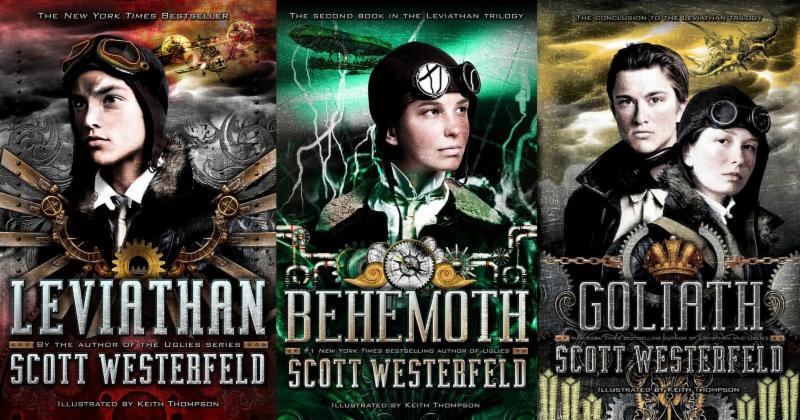
Leviathan trilogy by Scott Westerfeld
  • Leviathan by Scott Westerfeld: World War I with hybrid Darwinist beasties and steam-powered war machines.
  • Finishing School (Etiquette & Espionage) by Gail Carriger: Victorian era with (well-mannered) vampires and werewolves.
  • Sorcery & Cecelia or The Enchanted Chocolate Pot by Caroline Stevermer and Patricia Wrede: Regency England with magic and chocolate.

Historical Fiction:
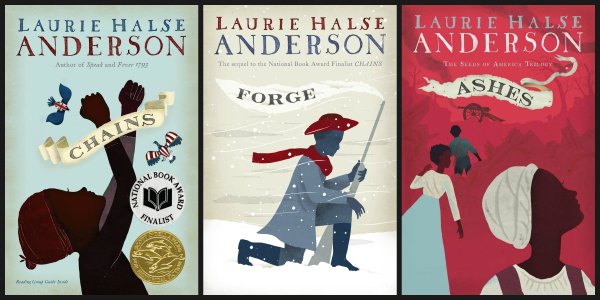
Chains, Forge, Ashes
  • Code Name Verity and Rose Under Fire by Elizabeth Wein: Young women flying and imprisoned during World War II.
  • Chains by Laurie Halse Anderson: Slavery and loyalty during Revolutionary times.

Fantasy with Kingdom Intrigue:
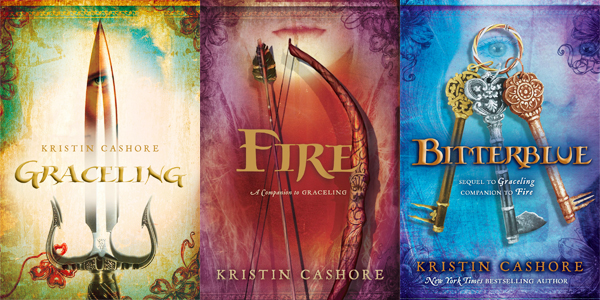
Graceling Realms covers
  • Graceling by Kristin Cashore: How to use one's power to help and not to hurt. The two following books (to read in either order, but Graceling first) have similar focus with different main characters.
  • Seraphina by Rachel Hartman: How to survive in court as a secret half-dragon when one's existence is considered an abomination.
  • Provost's Dog/Beka Cooper (Terrier) by Tamora Pierce: How to be fair in one's work for the Provost's Guard and engage in only the right amount of corruption. Takes place 200 years before the Alanna books. (If you prefer espionage, try the Trickster series, about Alanna's daughter.)
  • The Queen's Thief (The Thief) by Megan Whalen Turner: Don't believe everything the narrator says. He's a thief, after all, and kind of sneaky.  5th book coming out in May!

Coming of Age:
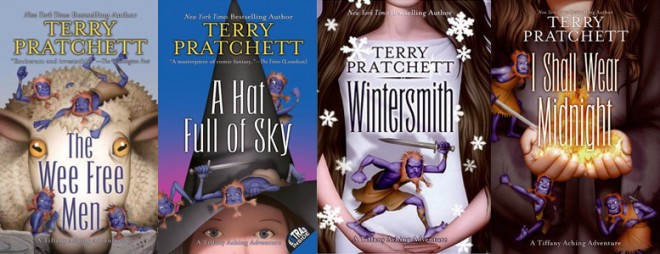
    Tiffany Aching books 1-4
  • Dairy Queen by Catherine Gilbert Murdock: Learning to speak up about what one really wants.
  • Tiffany Aching (The Wee Free Men) by Terry Pratchett: Learning to be a witch, and how much of that is learning to be oneself.
  • Every Day and Another Day by David Levithan: Learning to navigate sustained human interaction when one wakes up in a different body every day.
  • Annals of the Western Shore (Gifts) by Ursula K. Le Guin: Similar to Graceling -- can one's power be used to create and not destroy? Also similar to Graceling (and to Le Guin's Earthsea series) in that the books focus on separate, though interlocking, stories.
Previously published in the January 2017 Big Blue YA Newsletter.  
For links to recent YA newsletters, see August post "Young Adult Book Club Post-Book-Club Newsletters".

Tuesday, January 31, 2017

On Immigration and Refugees: Books for Kids and Teens

In the wake of the new president's unethical halt on immigration from select Muslim-majority countries, I am compiling some beautiful and inspiring books that focus, first, on exactly those populations -- Muslim people and/or refugees from the Middle East. They are joined by other books that focus on immigration and different cultures. This is not at all a comprehensive list; at the end, I'm including links to other, similar lists, and some further resources for understanding the issues.

Compiled by Jennifer Sheffield
latest update: 8/28/17

Picture books:

Four Feet, Two Sandals by Karen Lynn Williams and Khadra Mohammad; illustrated by Doug Chayka (2007)
Two kids meet in a refugee camp in Pakistan, each having acquired one of the same pair of shoes. Story of sharing and friendship.
Email us to order.

The Grand Mosque of Paris: A Story of How Muslims Saved Jews During the Holocaust by Karen Gray Ruelle; illustrated by Deborah Durland DeSaix (2009)
Detailed and gorgeously illustrated account, based on scant available research, of the ways the Muslim community of Paris were able to smuggle Jewish refugees out of the city during the Holocaust.
Email us to order.

Coming to America: A Muslim Family's Story by Bernard Wolf (2003)
Photo-essay about an immigrant family living in New York. Tells the story of their emigration from Egypt while focusing on a year in their life in the U.S.
Email us to order.

Migrant by José Manuel Mateo; illustrated by Javier Martínez Pedro (2014)
This detailed fanfold book follows the journey of a kid and his family from Mexico to the United States, through both text in English and Spanish and a single connected narrative illustration.
Email us to order.

Sitti's Secrets by Naomi Shihab Nye (1994)
A Palestinian-American child goes to meet her sitti, or grandmother, who lives halfway around the world.
Email us to order.

Yoko Learns to Read by Rosemary Wells (2012)
With only Japanese picture books at home, Yoko worries that she won't be able to learn to read English as soon as her classmates.

The Name Jar by Yangsook Choi (2001)
Worried about not being accepted at her new school, Unhei announces she will choose a new name. A story of self-acceptance.
Email us to order.

My Dadima Wears a Sari by Kashmira Sheth (2007)
Rupa's grandmother tells wonderful stories about what a sari can do, and shows her the sari she wore to travel to America.
Email us to order.

We Came to America by Faith Ringgold (2016)
Vivid illustration of the diversity of peoples that make up this country. (Including those who were already here.)
Email us to order.

Stepping Stones: A Refugee Family's Journey (In English and Arabic) by Margriet Ruurs, illustrated by Nizar Ali Badr, translated by Falah Raheem (2016)
A beautiful collaboration between a Syrian artist who makes breathtakingly emotive pictures using beach pebbles and a children's book writer who discovered his work online. Tells a story in verse of a family's experience fleeing war in their own country and finding refuge in a new land.
Email us to order.

From Far Away by Robert Munsch and Saoussan Askar, illustrated by Michael Martchenko (1995) / Rebecca Green (2017)
A new release of Saoussan Askar's story of coming to the U.S. to escape a war, and starting school in a new country. She wrote to Robert Munsch in 2nd grade about her experiences, and he helped her turn them into a picture book.
Email us to order.

Chapter/Middle Grade books:

The Storyteller's Beads by Jane Kurtz (1998)
Two children, one Christian, one Jewish (and blind), learn to trust each other while fleeing the Ethiopian famine in the 1980s.

The Arrival by Shaun Tan (2007)
A wordless, detailed, and surreal graphic novel of migration to a partly real, partly fantastical new world.
Email us to order.

Refugee by Alan Gratz (2017)
Three parallel stories: Josef's family is trying to flee Germany for Cuba in 1939. Isabel's family is trying to flee Cuba for the U.S. in 1994. And Mahmoud's family is trying to flee Syria for Germany in 2015. Told in short chapters one after another as they move farther and farther from their homes toward an unknown future.
Email us to order.

Number the Stars by Lois Lowry (1989)
A Christian girl helps her Jewish friend's family to escape Denmark during the Holocaust. Based on true history: the Danish resistance managed to rescue nearly all of the Danish Jews.
Email us to order.

The Mighty Odds by Amy Ignatow (2016)
A story of four kids from different social circles who together develop strange and awkward powers, including a kid who's been ostracized due to made-up fears about his Iranian parentage. Sequel coming in September!
Email us to order.

Inside Out and Back Again by Thanhha Lai (2011)
A verse novel based on the author's experiences as a refugee in Alabama after fleeing the Fall of Saigon: at first speaking no English, and then struggling to find happiness in a new world.
Email us to order.

Amina's Voice by Hena Khan (2017)
A Pakistani American girl struggles with change while watching her best friend, also from an immigrant family, befriend a formerly mean kid and talk about changing her name. And then her local mosque is vandalized.
Email us to order.

Young Adult:

The Sun Is Also a Star by Nicola Yoon (2016)
Two teens, one a child of Korean immigrants and one trying to halt her whole family's imminent deportation to Jamaica, meet and fall for each other.
Email us to order.

Black Dove, White Raven by Elizabeth Wein (2015)
Set in the 1930s in both the US and Ethiopia, a story of two kids of different races, raised as siblings after one of their mothers dies, learning to navigate both air flight in peacetime and wartime, and issues of race, gender, country, and parentage.
Email us to order.

This Land Is Our Land: A History of American Immigration by Linda Barret Osborne (2016)
A nicely accessible history of immigration from the 1500s to almost-present, not shying away from the contradictions and cognitive dissonance that have followed that history over the centuries. Illustrated with photos and historical documents.
Email us to order.

More Young Adult: I highlighted quite a few Young Adult books (and one for Middle Grade) on these topics in September's YA newsletter. Follow the link to read descriptions of the following:

Highlighting: The World Trade Center attacks of 2001 and resulting xenophobia
Shine, Coconut Moon by Neesha Meminger (2009) Email to Order
Towers Falling by Jewell Parker Rhodes (2016) Email to Order

Highlighting: Arabic/Muslim kids
Habibi by Naomi Shihab Nye (1999) Email to Order
I Am Malala by Malala Yousafzai (2013/2014) Email to Order

Highlighting: Immigration and refugees
Surviving Santiago by Lyn Miller-Lachmann (2015) Email to Order
Mexican Whiteboy by Matt de la Peña (2008) Email to Order
Home of the Brave by Katherine Applegate (2007) Email to Order
Outcasts United by Warren St. John (2009/2012) Email to Order

Additional lists and resources:

Books to Help Kids Understand What It’s Like to Be a Refugee by author Olugbemisola Rhuday-Perkovich
Young Adult and Middle Grade Reads from & about Countries from Trump’s Travel Ban by Kelly Jensen at Book Riot (2017)
I'm Your Neighbor Books, a searchable database of books portraying the contemporary immigrant and refugee experience.
Ten Middle Grade Books that Reflect the US Immigration Experience by librarian Natalie Dias Lorenzi (2012)
Children's Books about the Refugee/Immigrant Experience from Bridging Refugee Youth and Children's Services (BRYCS)
Contemporary Immigrant Experiences in Children’s Books from the Ethnic & Multicultural Information Exchange Round Table (EMIERT) of the American Library Association (2006)
Immigrant and Refugee Children: A Guide for Educators and School Support Staff from Teaching Tolerance
Fact Sheet for Refugee Week 2016 from the British Red Cross
8 educational resources to better understand the refugee crisis from Amnesty International (2015)

Saturday, December 17, 2016

Jen's Five New Books of Maps and Infographics

Best American Infographics 2016, edited by Gareth Cook (Mariner Books, $20)
Populations in war and peace, a periodic table of sweeteners, who's fighting whom in Syria, 163 years of Atlantic hurricanes, a literary road map. And so much more.

Speaking American: How Y’all, Youse, and You Guys Talk: a Visual Guide by Josh Katz (Houghton Mifflin, $25)
Colorful dialect maps of many, many words and phrases. I was particularly pleased that after my first flip through the pages, I had gathered enough clues to conclude (correctly) that the author is from around here...

Atlas Obscura: An Explorer's Guide to the World's Hidden Wonders by Joshua Foer, Dylan Thuras, and Ella Morton (Workman, $35)
Now I want to go to some pretty obscure places to see some pretty weird things...

The Way Things Work Now: From Levers to Lasers, Windmills to Wi-fi, a Visual Guide to the World of Machines by David MacAulay with Neil Ardley (HMH Books for Young Readers, $35)
Detailed and friendly diagrams of the way things work. I want to study it. Newly updated version!

Thunder & Lightning: Weather Past, Present, Future by Lauren Redniss (Random House, $35)
"...a spellbinding combination of storytelling, art, and science." -from the publisher's website

Jennifer Sheffield, December 2016

Wednesday, November 16, 2016

Jen's Five Children's Books About Children's Books

Okay, so I was all set to work on a grim list of dystopic books starting with The Handmaid's Tale and Native Tongue, and then thankfully I noticed a brand new picture book by Andrea Davis Pinkney about Ezra Jack Keats, author of The Snowy Day*. I picked it up and was won over by her tribute to both a poor Jewish child of immigrant parents and the African American child he chose to bring to life in stories designed to diversify the world of picture books. And then I thought simultaneously of the nearly-as-new bio of E.B. White and the rather older story of Margret and H.A. Rey escaping the Nazis. And a more compassionate list was born.

A Poem for Peter: The Story of Ezra Jack Keats and the Creation of The Snowy Day by Andrea Davis Pinkney, illustrated by Lou Fancher and Steve Johnson (Viking, $18.99)
The publishers of The Snowy Day were on the side of diversity, too, even back in 1962. Keats was expecting to use a snow sculpture on the cover, and his editor insisted he use an image of Peter instead.

Some Writer! The Story of E.B. White by Melissa Sweet (Houghton Mifflin Harcourt Books, $18.99)
Another heartfelt tribute. An illustrated biography full of collages of images and letters and early drafts of White's books. Note: Charlotte's Web didn't originally have that arresting first line the world has come to know and love...

The Journey That Saved Curious George: The True Wartime Escape of Margret and H.A. Rey by Louise Borden, illustrated by Allan Drummond (Houghton Mifflin, $8.99)
The Reys were German Jewish expatriates living in Paris when the Nazis swept through France. They escaped by bicycle shortly before the occupation of the city, and among their few possessions was the manuscript of Curious George. This book, beautifully illustrated, follows the story of their lives, both before and after their daring escape.

Wanda Gág: The Girl Who Lived to Draw by Deborah Kogan Ray (Viking, $16.99)
This is the story of the creator of the classic book Millions of Cats, and her struggles to keep art in her life while helping her family. Her name, by the way, rhymes with bog, not bag. (Assuming you pronounce "bog" with an "ah".) She added the accent herself. And Deborah Kogan Ray is a local author who's read at our Kids' Literary Festival!

Finding Winnie: The True Story of the World's Most Famous Bear by Lindsay Mattick, illustrated by Sophie Blackall (Little, Brown, $18.00)
Before Winnie was immortalized as Winnie-the-Pooh, she was a small brown bear, rescued in wartime and taken to the London Zoo, where she met a kid named Christopher Robin. Actually met. Meaning he was allowed into the enclosure, and they got to hang out together.

*which last year passed Harry Potter and the Deathly Hallows as the store's number one bestseller.

Thursday, October 20, 2016

Jen's Five Books Full of Heroes and Innovators

Five books of familiar and unsung heroes. The first three -- all focused on women's work -- are brand new as of this summer and this month. The other two, celebrating African American inventors and Jewish-American heroes, have been around for a while, with the latter expecting a re-release in 2017!

Wonder Women: 25 Innovators, Inventors, and Trailblazers Who Changed History by Sam Maggs (Quirk Books, $16.99)
I will mention that this book in fact contains far more than 25 people. It's just that some of them get in-depth coverage, while others get a paragraph. There are also interviews with living figures in each field. The writing is sharp and quirky, and it's a lot of fun.

Women in Science: 50 Fearless Pioneers Who Changed the World, written and illustrated by Rachel Ignotofsky (Ten Speed Press, $16.99)
Don't think it's all just Marie Sklodowska Curie.
It's got cool illustrations, so it lives in the graphic novels section of the store.

Rad Women Worldwide: Artists and Athletes, Pirates and Punks, and Other Revolutionaries Who Shaped History by Kate Schatz, illustrated by Miriam Klein Stahl (Ten Speed Press, $15.99)
Another release by the duo who created store-favorite Rad American Women A-Z: Rebels, Trailblazers, and Visionaries Who Shaped Our History...and Our Future! -- which I particularly love because U is for Ursula (K. Le Guin). Happy birthday to her, by the way. (-:

What Color Is My World? The Lost History of African-American Inventors by Kareem Abdul-Jabbar and Raymond Obstfeld, illustrated by Ben Boos and A.G. Ford (Candlewick, $5.99 paperback, $17.99 hardcover)
Hey, I had not realised that Kareem Abdul-Jabbar had just been named US Global Cultural Ambassador (by Secretary Of State Hillary Rodham Clinton) at the time this book first came out. Cool. Two kids learn about the contributions of African American inventors to fields like open-heart surgery, telecommunications, blood banks, and more.

Portraits of Jewish-American Heroes by Malka Drucker, illustrated by Elizabeth Rosen (Dutton hardcover $22.99, paperback forthcoming from Puffin in January)
From Harry Houdini to Albert Einstein, from Bella Savitsky Abzug to Ruth Bader Ginsburg, from Emma Lazarus to Michael Schwerner and Andrew Goodman... I know a lot more of the names profiled in this book than in the others, but some are still new to me.

Jennifer Sheffield, October 2016

Thursday, September 08, 2016

Celebrating Adoptive and Foster Families: A List of Books for Kids

Here are some books featuring families that have grown through adoption and/or foster care. Domestic and international, fiction and nonfiction, human and nonhuman, adoption from birth and new homes for older kids. There's a section for stories, a section for books celebrating families in general, and a list of links to further resources. The lists are by no means comprehensive, and there are links to other lists below; we'll keep updating as we add to our knowledge and collections.
Compiled by Jennifer Sheffield and Elliott batTzedek
----------
latest update: 7/9/17


Picture books about adoption and fostering:
A Mother for Choco by Keiko Kasza (1992)
Tell Me Again About the Night I Was Born by Jamie Lee Curtis, illustrated by Laura Cornell (1996)
The Day We Met You by Phoebe Koehler (1997)
Over the Moon: An Adoption Tale by Karen Katz (1997)
It's Okay to Be Different by Todd Parr (2001)
Emma's Yucky Brother by Jean Little, illustrated by Jennifer Plecas (2002)
Felicia's Favorite Story by Lesléa Newman, illustrated by Adriana Romo (2002)
And Tango Makes Three by Justin Richardson & Peter Parnell, illustrated by Henry Cole (2005)
Kids Need to Be Safe: A Book for Children in Foster Care by Julie Nelson, PH.D.; illustrated by Mary Gallagher (2005)
Owen & Mzee: The True Story of a Remarkable Friendship told by Isabella Hatkoff, Craig M. Hatkoff, and Paula Kahumbu; photographs by Peter Greste (2006)
Bringing Asha Home by Uma Krishnaswami, illustrated by Jamel Akib (2006)
Motherbridge of Love by Xinran Xue, illustrated by Josee Masse (2007)
We Belong Together: A Book about Adoption and Families by Todd Parr (2007)
Murphy's Three Homes: A Story for Children in Foster Care by Jan Levinson Gilman, illustrated by Kathy O'Malley (2008)
In Our Mothers' House by Patricia Polacco (2009)
[Note: This author's books are generally more appropriate for an older audience than usual for picture books.]
Star of the Week: A Story of Love, Adoption, and Brownies with Sprinkles by Darlene Friedman, illustrated by Roger Roth (2009)
Sweet Moon Baby: An Adoption Tale by Karen Henry Clark, illustrated by Patrice Barton (2010)
Bad Kitty Meets the Baby by Nick Bruel (2011)
Wolfie the Bunny by Ame Dyckman, illustrated by Zachariah Ohora (2015)
Real Sisters Pretend by Megan Dowd Lambert, illustrated by Nicole Tadgell (2016)
My New Mom and Me by Renata Galindo (2016)
Quackers by Liz Wong (2016)
Real Sisters Pretend by Megan Dowd Lambert, illustrated by Nicole Tadgell (2016)
Home at Last by Vera B. Williams, illustrated by Vera B. Williams and Chris Raschka (2016)

Picture books about reproduction and families:
All Families Are Special by Norma Simon, illustrated by Teresa Flavin (2003)
The Family Book by Todd Parr (2003)
The Great Big Book of Families by Mary Hoffman, illustrated by Ros Asquith (2010)
What Makes a Baby? by Cory Silverberg, illustrated by Fiona Smyth (2012) [This book separates the genetic/biological components from the emotional component of making a baby, thus allowing for nontraditional families.]
Families, Families, Families! by Suzanne Lang & Max Lang (2015)

Links to more lists and resources
Chicago Now: Top Adoption Books For Kids: A Reading List for Children and Teens in Adoptive and Foster Families
Children’s Home Society of Minnesota (CH) and Lutheran Social Service of Minnesota (LSS): Favorite Adoption-Themed Children’s Books
MetroKids: Children's Books About Adoption
Parents.com: Children's Books About Adoption
Mothers' Bridge of Love: Who We Are
AdoptUSKids: Pennsylvania Foster Care and Adoption Guidelines

Sunday, August 14, 2016

Young Adult Book Club Post-Book-Club Newsletters

Up until the book club ended in May, I kept a list of all the books we'd read on the book clubs page of the website. Now that I'm using a different format for the newsletters, with multiple book recommendations each time, and themes tying them together, that list seems unwieldy for the purpose of archiving. So I'm posting here the links to the newsletters themselves, starting from April, 2016. And I'll plan to keep updating!

If you aren't on our newsletter list, you can sign up here, and if you want to change which newsletters you get from us, you can click on the Update Profile link in any newsletter we send you!


May 2017:
Big Blue YA News -- KLF Author Extravaganza, News of Our Neighbors, and Readings of Resistance


April 2017:
Big Blue YA News -- Parks and Indie Bookstores, Love and Hate, and Authors Coming!


March 2017:
Big Blue YA News -- Dragons, Dragons, Peeps...and also Dragons!


February 2017:
Big Blue YA News -- Awards, Immigration, Peeps, and Dragons!


January 2017:
Big Blue YA News -- Series to Read and Reread, Store Bestsellers, and Activism!


December 2016:
Big Blue YA News -- No Name-Calling: Standing Up, and Fighting Back!

Note: There's a link in this newsletter to an interview that disappeared from the Girls Who Code website (and then reappeared later), and so the link in the newsletter is broken. Here's the correct link to the interview with Andrea Gonzales.

November 2016:
Big Blue YA News -- Independence, Slavery, and Standing Rock. VOTE!


October 2016:
Big Blue YA News -- Dystopias, Speculative and Real...or Coming Soon


September 2016:
Big Blue YA News -- Village Fair, Combating Xenophobia, and still more Harry Potter!


August 2016:
Big Blue YA News -- Reality in Fantasy, Writers and Their Writing, and More Harry Potter Events


July 2016:
Big Blue YA News -- Rise of Fascism and WWII**, Pretzels and Soda, and Pokémon GO!


June 2016:
Big Blue YA News -- Steampunk, Harry Potter, and Homemade Cookies!


May 2016:
Big Blue YA News -- Final Gathering (a Party!), Social Action, and Recommendations!*


April 2016:
Big Blue YA News -- Kids' Lit Fest, Final Meetings, and Verse Novels!


* The recommendations for May are two books about trans students already presenting as their truer selves and dealing with whether/how to come out to people in their schools, with questions of trust and of the perceptual differences between secrecy and privacy.***
** Themes for July and for September through December chosen with current political events in mind.
*** FYI, in the April-June newsletters, the link to our QUILTBAG books blog post (particularly relevant for May) is broken, though it was corrected starting in July. And then it was misdirected from December to February! Better since March, though.

Saturday, July 30, 2016

Author Interview: Lorrie Kim

by Jennifer Sheffield

Hi, Lorrie! Congratulations on the release of Snape: A Definitive Reading -- Looking forward to seeing you at the release party tonight (more details below)! Here is my synopsis:

The first line of Snape: a Definitive Reading tells us, “The Harry Potter series may be named after the Boy Who Lived, but if you want to know the story, keep your eyes fixed on Snape.” As readers already know by the end of Deathly Hallows, Severus Snape, with his hidden stories and intense emotions and ever-ambiguous actions, holds the keys to Harry’s hidden stories, and to many of the events of the series, from beginning to end, and beyond. What may not have occurred to us is how the series looks, from beginning to end, when seen through Snape’s eyes. Lorrie Kim has woven together a picture of Snape’s motives and internal processes that both rounds out the story and gives new, even comforting, perspectives to what are, for me, some of the hardest moments of Rowling’s series. It’s a beautifully consistent and thorough picture of a powerful and complex person.

How did this book come about? I know you’ve presented papers at academic Harry Potter conventions. Did you draw on that work in putting together your definitive reading?

Story Spring Publishing approached me about a nonfiction book on Snape. The original plan was to draw on my conference presentations and adapt them into a book. But I found that those shorter papers tended to be topical and to skip around the timeline of the series in making focused arguments, whereas for a sustained book, it made more sense to go chronologically through the series and look at how Rowling developed characters and revelations. I also found that many of my readings had changed. I ended up including many of the ideas from those papers, but not much of the wording.

What kinds of insights have you gained about the series from other people’s presentations?

I have such clear memories of moments when other people’s arguments inspired me. I mention a couple of them in the book. For example, in 2009, I heard psychologist Mara Tesler Stein explain that a Patronus is a mirror of one’s most loving self, and that when Harry first attempts to cast one, he can’t because he’s using the wrong kind of memories. When he uses memories of loving connection between people, the spell works. That stunned me – there are right and wrong kinds of memories for happiness spells? It opened my eyes to the way Rowling uses magical imagery to express psychological truths. It made so many readings possible to me. It helped me understand that when Rowling shows people emanating silvery magical light, it has to do with their individual selves – she might say “souls” – but when she shows golden light, it’s about the glow that comes of love between people. Which helped me understand why the dome of light between Voldemort and Harry is golden, and how that threatens Voldemort. Which made me think about wand cores connected through golden light, and how Harry and Voldemort are similar at the core. Which made me think about Hufflepuff colors of yellow and black, which gave me the notion that one trait of Hufflepuffs is that they believe we are all the same at the core.

This cascading effect of mental connections happens to me so frequently when I listen to other people’s presentations based on a text we have in common. I know I’ve had similar reactions listening to Hilary K. Justice or Mark Oshiro. It doesn’t necessarily mean I agree with that person’s readings, just that their way of seeing illuminates something for me and brings more and more understanding.

Does JKR pay attention to analyses of this sort? Have you ever interacted with her yourself?

My understanding is that Rowling knows better than to delve into the ever-growing pile of words that people write about her glorious fiction. She’s been so influential that there’s too much of it for a single author to process, anyway. I cannot begin to envision how much feedback is directed toward her, how many entreaties, whether from literary critics, politicians, non-government organizations that crave her support, teachers, the publishing industry, or individual readers. I approve fiercely of anything she does to safeguard her creative energy and sanity. It floors me that she was even able to publish the seventh Harry Potter book, considering the pressure surrounding her, the multiple international businesses that were financially dependent upon her delivering a finished manuscript, the din of the fans and detractors debating what they thought she ought to achieve with that final installment. That she has gone on to create more fiction to please herself is something that both uplifts me and gives me a growling laugh of pleasure. I have never met her and don’t expect to. She gives so much, through continued publishing in revolutionary formats, through Twitter, and through her fascinating charity work. I appreciate that abundance.

I find that a reference quote from a book I’ve read can bring the original scene powerfully to mind. In this way, reading your book has left me feeling as though I’ve just crammed the entire Harry Potter series into my head in a few days, on fast-forward! Have you had times during the process where you feel you’re living the series?

Not the series, no. But the psychological realities depicted in the stories, yes. For example, a few years ago, I had a terrible argument with someone in which I was greatly at fault, and I was so ashamed of myself that I couldn’t stand the sight of this person. I was also conscious of the things this person had done to create the fight and contribute to it. Eventually, I approached them to give a full apology, mentioning only my own part in it and my regret, but it was never easy to see that person’s face again after that. I was surprised when they apologized for their own part – I didn’t expect or require that – but it was gratifying to take that as evidence that they believed I was sincere. That whole episode helped me understand Slughorn, in his shame, altering his memory and running away from Harry. It was the only thing that helped me understand how Snape could possibly convince himself of such whole-cloth lies as Harry enjoying his fame – I couldn’t forget how ashamed and guilty I felt when I behaved badly toward someone, and how hard it was to stop thinking angry thoughts about them. I never enjoyed glimpsing this person again, even after the mutual apology. This made me understand why Rowling shows that Harry and Draco never become friends, why Rowling has said in interview that Harry gets Snape a portrait in the headmaster’s office but never feels the urge to go visit it. Not every conflict has to end in forgiveness and friendship. And if I want stories of enmity that turns into closeness, I feel as though I can find those stories more easily. I appreciate that the series gives stories of resolution without friendship.

After a discussion about Gryffindors and Slytherins generalizing and demonizing each other’s entire House, you say of Chamber of Secrets that “This entire volume is about the danger of dormant resentments that can be awakened in an atmosphere of suspicion.” Later on, you mention that “The Inquisitorial Squad may be hand-picked by Umbridge, but as individuals, they are just as expendable to her as the other students. Harry Potter and the Order of the Phoenix provides young readers with extraordinarily precise insight into the thinking of tyrants.” Do you feel these issues have particular relevance with current events?

I’ve thought about these elements of Harry Potter so often during the ghastly news of shootings, bombings, and other large-scale crimes of hate. Rowling repeatedly poses the question in her series: What kind of monster would kill a baby? This is a war crime. How does a person become that? How do we allow it to happen? It resonates with me particularly when we hear that a mass murderer has very recently declared allegiance to a larger terrorist group. This is how Voldemort attained followers. Rowling showed, through that character, a tyrant who had his own agenda, internally inconsistent and mad, which he shared with no one. He identified the agendas and weaknesses of others and appealed to them, giving people whatever would feed their own unhealthy appetites, which would distract them from looking at him too clearly. Teen Snape fell for this, like many others who became Death Eaters while young. He was an unstable, vengeful person who was hungry for the grandiosity promised by Voldemort. Voldemort’s actual aims weren’t even compatible with Snape’s desires, but it didn’t matter. We see this in the news when we investigate claims of ties to terrorist groups. Those ties don’t always go deep.

As for current events such as the xenophobia driving Brexit or the chilling spectacle of this year’s U.S. presidential campaign…yes. When I read quotes from British citizens about what they thought it would accomplish to leave the European Union, I could only picture Uncle Vernon. When I see politicians egging on angry, resentful voters to commit acts of violence and other crimes, it’s agonizing to see how the voters are being duped – as though these politicians have any empathy at all for these people whose votes they want, as though they won’t betray these voters in an instant for their own convenience. I think the Potter series is brilliant in showing us the feelings behind such conflicts. The difference between someone using people without caring, like Umbridge using Draco but distrusting him, and someone willing to give actual help, like Dumbledore offering to put Draco’s entire family into hiding. Those things feel different. Stories reach us and help us know that.

The gift of the Harry Potter series, to me, is that it’s so widely read, such a shared text, that episodes from the series can be used to communicate about complex issues. If you sense that a politician is an Umbridge, know that nothing good can come of allying with her. If you read demonstrably false negative press about a public figure, know that it might reflect an agenda that has nothing to do with that person – that Stan Shunpike might not be a Death Eater, that Hagrid never opened the Chamber of Secrets and Fudge sent him to Azkaban anyway, for his own political gain.

In this book, you get inside more characters’ heads than just Snape. One of the things that most surprised me in reading it was your insight into Hermione, including both her thoughts about and her connections to her potions professor, throughout the series. Were you noticing this in your original reads of the books, or did it come out through working on the analysis?

The dynamic between Hermione and Snape always drew my notice. It puzzled me. I found her disavowal of “books and cleverness” at the end of the first book to be problematic; I sensed something unresolved in the author because I don’t feel satisfied that we are shown why Hermione would believe this enough to blurt it out at such a pressured moment. I found her patience with Snape, while he alternately ignored and insulted her, to be curious. I had to remind myself, a few times, to write less about their dynamic for this book. The dynamic between Snape and Harry should be the central one for writing about Snape’s story, whether or not I personally find Hermione to be a more intriguingly written character than the titular hero.

I was pleased to see the attention you gave to bullying and discrimination, and to the importance of protection and de-escalation. It’s important to recognize the ways that some teachers, even the nice ones, can be complicit in encouraging these kinds of harmful behaviors, and that some teachers, even the bullying ones, can work to limit the damage such behaviors cause.

Chapter 3, “Severus Snape and the Prisoner of Azkaban,” was by far the hardest for me to write. I thought I knew the series pretty well, but on my re-read for writing this book, I kept finding surprise after surprise when I started to delve into what Lupin and Snape were really thinking throughout that year. I think many readers resist seeing that Lupin, as well as Snape, inflicted damage in his teaching, because Snape’s harmful classroom behavior is so outrageous. It can feel as though acknowledging Lupin’s wrongdoings might mean letting go of the reader’s enjoyment of his retorts to Snape. I may be proudest of that chapter because I think perhaps, when you read it, you can sense the energy I felt from making new connections rather than writing about things I’d been considering for some time.

This continual experience of new connections, more than anything, captures why I love the Harry Potter series so much. I’m well above the target age group for the writing and I’ve written about the series for years, but every single time I re-read the books, I find new things. Rowling has created something extraordinarily complex. When the series was not yet finished and some critics argued that it was not, and would never be, good enough to become a classic, I remember the scholar Hilary K. Justice saying at a conference, “Does it reward re-reading?” For me, at least, it’s a resounding yes.

What was the writing process like for you? Did you have everything pieced out and then stitch it together like a quilt? Did you find that new connections came to you while you were writing? Did anything surprise you in creating this book?

The writing process involved thanking my husband and children repeatedly for managing without me while I wrote frantically. I created a painstaking outline that hit all the themes I wanted to cover and then ended up ditching the whole thing and just going chronologically through the series, as is, I think, appropriate for analyzing the writing of a mystery story. New connections came to me as I re-read in preparation for writing, and then I had to be disciplined about writing only what I had in my notes and not rambling further.

Probably the thing that surprised me the most this time was the realization that Snape truly believed, based on evidence, that Lupin was deliberately grooming Harry to trust him because he was planning to bite Harry while in werewolf form. I never understood that before and it’s shockingly dark. Rowling is so good at resisting the temptation to spell things out; she keeps some things subtextual or completely unspoken, granting so much respect to her young readers and their ability to read deeply. Turns out that her subtlety is often wasted on some of us middle-aged readers, too. Every re-read leaves me wondering what else I’ll find the next time I go back.

Do you have other projects that you’d like to tell us about?

I’ve been thinking about the reading of Harry Potter from the point of view of parents, transmitting this story to the next generation, reading it together as a family, participating in the transformation of the series from a publishing phenomenon into a children’s classic, embedding it into the popular culture. So my next project will be to put together a proposal and find an agent for that!

Excellent. We'll look forward to reading it!

And now for our "3 for 3" book questions:

1. What were 3 of your favorite books from childhood/teen years?


I just had fun answering this in my interview with Book Jawn Podcast!
For them, I said Jane Eyre, Are You There God? It’s Me, Margaret, and A Tree Grows in Brooklyn. Let me think of different answers for you…

D’Aulaires’ Book of Greek Myths, Ingri and Edgar Parin d’Aulaire
I was obsessed with this book when I was 6 and 7.

A Bargain for Frances, Russell Hoban
One of the most brilliant books I think I’ve read for any age group. So complex, and rewards dozens – hundreds – of re-reads, just as the Harry Potter series does.

The Little House series, Laura Ingalls Wilder
I nearly had it memorized. To this day, deep down, I probably still believe (incorrectly) that I know how to make cheese or plane a shingle because of those books. Their romantic depictions of cooking, sewing, knitting, and quilting definitely inspired me to learn those skills.

2. What are 3 books that you've read recently that surprised you?

I have read almost no books this year, since I was busy writing this one!

One of them, though, has been Immanence, a short story collection edited by J.L. Aldis. Full disclosure: some of the stories were written by people I’ve come to know because I’ve read and admired their fiction online, for free. What surprised me is that these profoundly well-edited short stories are even higher in quality than the stories that made me want to seek out these authors and leave them glowing reviews. That kind of stunned me, actually. And made me appreciate anew that no matter how much we enjoy the explosion of different platforms for writing these days, the fact of knowing that something will be published between physical book covers can elevate even the best writers to achieve more.

I’ve read the Hamiltome, of course. Hamilton: The Revolution by Lin-Manuel Miranda and Jeremy McCarter. I bought it from Big Blue Marble, in fact. It was another experience of being surprised at what we can give ourselves permission to achieve, how much ambition we’re allowed to indulge. The wit of the Revolutionary-era typefaces and phrasing kept delighting me. The matching of different songs to different behind-the-scenes stories about the musical or the cast felt so deep, so satisfying. Such a good matching game.

And honestly, those are the only two books I’ve read recently that surprised me. So many of my friends are writers who work in different media, such as serialized web fiction or online cultural critique, that I read almost no actual books while I was writing Snape. I did enjoy a web comic called Check, Please (omgcheckplease.tumblr.com) that surprised me with a whole new world of collegiate slang that was fun to learn. The characters play hockey, about which I know less than nothing, but I was lured into reading it because it also contains figure skating, pastry, gay love stories, and feminist food studies, all of which are very much my areas.

3. What are 3 books that influence/d your work?

I have never thought of this question in reference to my own nonfiction writing! It’s a question I associate more with novelists. Hmm.

I mentioned this to Book Jawn Podcast, too. Thomas Jefferson and Sally Hemings: An American Controversy by Annette Gordon-Reed taught me so much about how to construct arguments using common sense. This book was published before DNA evidence vindicated those who maintained, despite racist denial, that Jefferson did have a slave wife and children. The author’s meticulous scholarship won my respect and awe, but it was her extremely dry humor that won my heart.

The Power of Beauty by Nancy Friday. I think that book had a very mixed critical reception, and I don’t love all of it. I do, however, love the risks she takes with her leaps of intuition, delving into powerful emotions and using those as her starting points. That strategy means she will sometimes miss the mark, but when she hits, she hits deep. As a reader, those hits make her book worth it to me, and I probably learned something from her about including intuition when writing critical nonfiction.

The Bones of the Others by Hilary K. Justice. I encountered this writer through her Harry Potter work, and that led me to her work on Hemingway. I experienced so much meditative bliss when reading along with some of her analyses. Like the Hamiltome, I felt that her work gave permission to indulge in ambition, not to hold back. This writer likes to analyze word by word, and then to analyze the spaces between the words, some of which are silences and some not. I think Snape would appreciate the beauty in this approach.

Thank you so much for joining us, Lorrie!

Lorrie Kim lives in Philadelphia, PA with her clever, grumpy, magical spouse and their Harry Potter-reading offspring, one born between Order of the Phoenix and Half-Blood Prince and one in gestation during the publication of Deathly Hallows.

Thanks for reading!!! If you're local to the area, please let the bookstore know if you would like to order a copy of Snape: A Definitive Reading. You can also come to Lorrie's Book Launch Party, TONIGHT, Saturday, July 30, 8:30pm, In the midst of our Harry Potter and the Cursed Child series of events! If you can't make the party, you can email orders to orders [at] bigbluemarblebooks [dot] com, call (215) 844-1870, or come see us at 551 Carpenter Lane, in the Mt. Airy neighborhood of Philadelphia.

Friday, May 06, 2016

Nif's and Jen's Mothers' Picks for Mother's Day

Recommendations from Doris Woodfin (Nif's mum):


Daughters of the Dragon: a Comfort Woman's Story by William Andrews (Madhouse Press, $14.99)

I'll be Seeing You by Suzanne Hayes and Loretta Nyhan (Mira Books, $15.95)

Water for Elephants by Sara Gruen (Algonquin Books of Chapel Hill, $14.95)

Up Island by Anne Rivers Siddons (Avon A, $14.99)

Olive Kitteridge by Elizabeth Strout (Random House, $16.00)


Recommendations from Lucy Sheffield (Jen's mom):


Far from the Tree: Parents, Children, and the Search for Identity by Andrew Solomon (Scribner, $21.50)

Being Mortal: Medicine and What Matters in the End by Atul Gawande (Picador, $16.00)

Tell Me How Long the Train's Been Gone by James Baldwin (Random House, $16.95)

Guns, Germs, and Steel by Jared Diamond (W.W. Norton, $18.95)

Philadelphia Chickens (Book and CD) by Sandra Boynton (Workman Publishing, $16.95)

Saturday, April 30, 2016

Jen's Five Books Unfolding

Bird & Diz by Gary Golio (Candlewick, $19.99)
(1) Early this month, at the Kids' Literary Festival, Gary Golio came with his wife and fellow-author Susanna Reich, and illustrator E.B. Lewis, to present picture books of history and biography. The kids in the room, including mine, were a bit young for the discussion, so they hung out in the castle corner, popping up for the actual readings ... and for the presentation of Bird & Diz, Gary's colorful and expansive story of Charlie Parker and Dizzy Gillespie and their work in bebop and jazz.

Out the Window by Cybèle Young (Groundwood Books, $12.95)
(2) So after Gary and Susanna and E.B. Lewis unfolded Bird & Diz across the room and went back to their discussion, my small child quietly wandered off to the children's section. A few minutes later, just as quietly, he returned with a book in a box, sat back in his corner and proceeded to unfold this new book across the floor. (Not pictured, alas.) Out the Window is an accordion book that shows many many snippets of things passing outside a window...until you reach the end and turn to the reverse pages, where you can see everything that has happened from the OTHER SIDE.


And then I remembered that we have other unfolding books in the store!

Migrant: The Journey of a Mexican Worker by José Manuel Mateo, illustrated by Javier Martínez Pedro (Abrams Books, $17.95)
This detailed fanfold book follows the journey of a kid and his family from Mexico to the United States, through both narrative text and a single connected narrative illustration.


Life-Size Zoo by Toyofumi Fukuda (Seven Footer Press, $17.95)
Life-sized photographs of many animals! Or parts of animals. Some pages fold out, because some animals are REALLY big.

Thing Explainer: Complicated Stuff in Simple Words by Randall Munroe (Houghton Mifflin Harcourt, $24.95)
Here is everything, explained in detail, using (approximately) the 1,000 most common words in English. As with Life-Size Zoo, Thing Explainer has mostly regular pages, with a few places that unfold for greater detail -- such as the Sky at Night, the Earth's Surface, and The Pieces Everything is Made Of (periodic table), and at the very back, a building called the Sky Toucher (a 4-page-spread). From the creator of the xkcd online comic.

Bonus: Here are two more fully concertina-style books, recently added to the bookstore's collection:
The Secret Garden, Unfolded, Retold in Pictures by Becca Stadtlander (Rock Point, $9.99)
Friendly Faces in the Yard: Baby's First Soft Book by Surya Sajnani (QEB Publishing, $12.95)

Jennifer Sheffield, April 2016

Monday, February 29, 2016

Jen's Five Fabulous Upcoming and Recent YA Releases!

The Rest of Us Just Live Here by Patrick Ness (Harperteen, $17.99)
This isn't exactly a fantasy story. That is, there is an invasion of Immortals, and there are teens who take it upon themselves to find out everything, and right the wrongs, and possibly die in the process...but this is not their story. While their story is synopsized, briefly, as the first paragraph of every chapter, the rest of the book...covers other kids at the school. Regular kids. And their families and friendships. And the new kid in their crowd. And the secret or not-so-secret crushes, and the meaning of life and love. All regular, normal stuff. Even if one of them might possibly be a god of cats.

Another Day by David Levithan (Knopf, $17.99)
This is the companion to Every Day, Levithan's story of a teenager called "A" who occupies a different person's body each day, meeting their peers and parents, and conscientiously trying not to change their lives too much. But then A meets Rhiannon and tries, against all odds, to meet her and get to know her, day after day. Another Day tells the same story, brilliantly, from Rhiannon's point of view.

Symptoms of Being Human by Jeff Garvin (Harperteen, $17.99)
Supposing you were the child of a noted politician, starting a new school, suffering from anxiety attacks...and genderfluid. Especially when you're not out, and you need to avoid gender dysphoria differently on different days, and the kids at the new, promising school are not new and accepting but (mostly) new and awful. Riley has been advised to start an anonymous blog to help process all this...but then the blog goes viral, and it starts to become clear that someone at school, not one of the nice ones, may have found out who the author is.

On the Edge of Gone by Corinne Duyvis (Amulet Books, $17.95)
I've mostly avoided planet-wide natural disaster stories of late, but this one struck me because the main character who's trying to find shelter for herself and her family (so they can survive the comet and its aftermath), is living with autism. And with a parent who's not entirely present, so she starts taking on more responsibility. A fascinating look at different types of accommodation, and an extra twist to the disaster situation.

What We Left Behind by Robin Talley (Harlequin Teen, $18.99)
A fascinating story focusing on the intersections of sexuality and gender. And long-distance relationships, and new friends, and change. And gendered language. Oh, and truth: the figuring out and withholding and parceling out and offering of (not necessarily in that order).

Adapted from the February Big Blue YA Newsletter.

Jennifer Sheffield, February 2016